Warehouse Risk Assessment: Optimize Your Retail Operations
Conducting a warehouse risk assessment can help retailers uncover operational blind spots, improve fulfillment performance and identify opportunities to reduce costs, increase efficiency and strengthen the customer experience.
September 24, 2026 • 9 minute read
Author: Phyllis Jackson, Senior Manager, US Marketing, UPS
Key Points
- Despite years of investment in digital transformation and supply chain technology, inventory distortion still costs retailers $1.7 trillion annually.1
- Performing a warehouse risk assessment helps retailers identify operational risks tied to inventory accuracy, labor efficiency, fulfillment speed, returns processing and warehouse flow.
- Retailers can improve warehouse optimization through better visibility, smarter slotting, data-driven labor planning and targeted automation that reduces friction across fulfillment operations.
What is a Warehouse Risk Assessment?
A warehouse risk assessment is a comprehensive evaluation of how inventory, labor, technology, equipment, space and fulfillment processes perform across a warehouse operation. Retailers perform warehouse assessments to identify operational bottlenecks, fulfillment risks, inefficiencies and cost drivers that affect fulfillment performance and the customer experience.
The assessment may include physical walk-throughs, a workflow analysis, operational data reviews and systems evaluations to create a clear end-to-end picture of warehouse performance.
For retailers, that means looking closely at how inventory moves, where orders slow down, workforce productivity and whether technology is supporting the pace of fulfillment. A technical assessment can also reveal whether systems, equipment and automation are helping the operation scale or creating new points of friction. Optimizing warehouse operations ultimately leads to more effective processes driving value across the supply chain. An efficient fulfillment process means retailers can offer premium service levels without inflating costs.
The goal is to identify opportunities to improve warehouse optimization by increasing throughput, reducing operational friction and building a more resilient, scalable fulfillment operation.

How Can Retailers Measure Risk in Warehouses?
Retailers measure warehouse risk by identifying where fulfillment operations break down, slow down or lose visibility. Performing a warehouse risk assessment can help uncover issues that affect inventory accuracy, order flow, labor performance and customer service before those problems become larger operational disruptions.
Warehouses are no longer just storage spaces. They’ve evolved into real-time fulfillment hubs that support stores, e-commerce orders, curbside pickup and delivery networks simultaneously. When warehouse performance slips, retailers feel it quickly through delayed orders, inaccurate inventory availability, higher transportation costs and a weaker customer experience.
Retail inventory distortion now costs the industry roughly $1.7 trillion annually, even after years of investment in digital transformation and supply chain technology. Much of that cost comes from out-of-stocks and overstocks, which leave shelves empty, tie up working capital, trigger markdowns and weaken profitability.1
Returns management remains another major challenge, particularly because returned products are often delayed, misplaced or lost somewhere in the reverse logistics process. Research also shows that 70% of retailers struggle with inventory accuracy for these reasons. As a result, retailers have a harder time maintaining accurate inventory levels and replenishing products efficiently.1
These reasons underscore why a warehouse assessment is so critical. Retailers need continuous visibility into how inventory moves so they can refine their operations to adapt to evolving customer expectations and shifting demand.
“The goal isn’t just to prevent disruptions,” says Jarret Arnold, Retail Strategic Lead, UPS. “It’s to pinpoint where the warehouse is most vulnerable to delays, errors, shrinkage, labor challenges, safety risks and service breakdowns that can quietly erode profitability and customer trust over time.”
What You Can’t See is Costing You: Why Warehouse Assessments Matter
Consider this scenario: a mid-size omnichannel retailer struggling with delayed online orders, frequent stockouts and inventory that doesn’t match what employees see on the warehouse floor. On paper, everything looks fine. Forecasting is solid, and the product is available.
But a warehouse assessment tells a different story: The real issue isn’t demand; it’s execution. Inventory accuracy is hovering around 88%, meaning items marked as available often aren’t actually pickable. Fast-moving SKUs are stored in inefficient locations that slow fulfillment, while labor allocation no longer aligns with real-time demand. At the same time, returns are piling up, delaying products from reentering sellable inventory and replenishment to stores, and forward-pick locations have become inconsistent.
Once those operational gaps become visible, the retailer can take action. High-velocity inventory gets reslotted closer to fulfillment areas. Cycle counting improves inventory accuracy, while returns processing and replenishment workflows move faster and more consistently.
Within a few months, fulfillment speeds improve, inventory accuracy rises, stockouts decline and labor productivity increases, driving stronger sales and a better customer experience. What looked like a demand problem was actually a visibility and execution issue uncovered through the warehouse assessment.
Common areas for warehouse risk include:
- Inventory accuracy: Inaccurate cycle counts and returns processing errors can disrupt operations and inflate costs.
- Order accuracy: Inaccuracies lead to costly shipping errors, returns and customer dissatisfaction.
- Dock-to-stock bottlenecks: Operational delays slow replenishment and reduce responsiveness.
- Equipment downtime: Automation failures, maintenance frequency and aging infrastructure can cause disruptions and slow fulfillment.
- Capacity utilization and congestion levels: Bottlenecks, delays and fulfillment failures slow warehouse workflows, especially during demand spikes.
Warehouse Optimization: Do More with the Space You Have
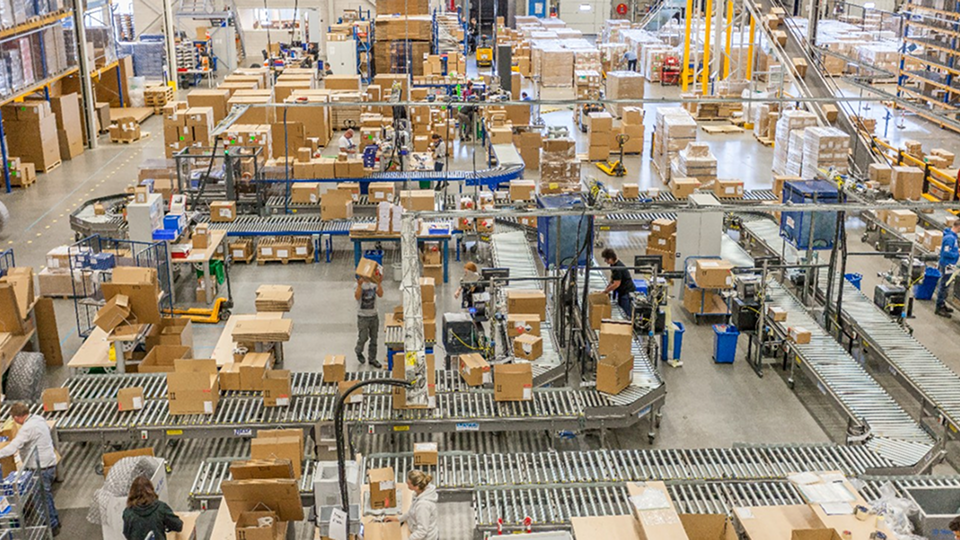
Many retailers can improve warehouse throughput without expanding their footprint. The constraint often isn’t space; it’s how the space is used. The opportunity is to improve flow before adding square footage.
It starts with better slotting, placing fast-moving inventory closer to picking and packing areas to cut travel time and speed fulfillment. It also means rethinking the layout to reduce congestion, streamline traffic and clearly separate inbound and outbound workflows. Savvy retailers are also increasing throughput through targeted automation. This includes conveyor and sortation systems, autonomous mobile robots (AMRs) and smarter warehouse management systems that improve workforce productivity and picking efficiency.
Real-time inventory visibility, dynamic replenishment and data-driven labor productivity improvements also help operations become faster and more responsive as order patterns shift.
When these operational issues aren't addressed, bottlenecks build quickly. Congested layouts, disconnected systems and slow returns processing all reduce throughput, especially during peak periods. When returns sit too long, valuable inventory remains out of circulation, driving up carrying costs and making it harder to meet demand.
Connected Warehouse Capabilities Improve Speed and Control
Modern warehouse operations depend on more than stand-alone technology investments. The real advantage comes when systems, data and workflows operate together in a connected environment that improves visibility, coordination and decision-making across fulfillment operations.
Tools like radio frequency identification (RFID), IoT sensors and modern warehouse management systems give retailers a real-time view of how inventory is actually moving, reducing blind spots and improving accuracy. At the same time, predictive analytics and artifical Intelligence systems can analyze demand patterns, workforce productivity and equipment performance to flag potential disruptions before they escalate into operational problems.
That same connectivity extends beyond the warehouse itself.
“When stores, warehouses, e-commerce platforms and transportation partners are connected, it becomes much easier to support ship-from-store, curbside pickup, same-day delivery and other distributed fulfillment models,” Arnold says. “When done right, this level of connectivity shifts operations from reactive to predictive.”
Instead of scrambling to fix problems after they emerge, teams can anticipate disruptions, adjust in real time and maintain more consistent fulfillment performance.
Turn Technology into Measurable ROI
Retailers often see the strongest ROI on warehouse technology when digital tools, automation and improved operational processes work together to reduce friction across fulfillment operations.
That improvement shows up in several ways. Fulfillment moves faster, inventory accuracy improves and labor becomes more productive. Retailers can also reduce excess inventory, process returns more efficiently and lower the operational cost tied to fulfillment errors and manual workflows.
Automation also helps warehouses operate more consistently during peak demand periods. Reducing repetitive manual work can improve safety while helping teams keep pace with growing order volume and rising customer expectations.
Many warehouses also achieve what is often called “avoidance ROI.” As operations become more efficient and scalable, retailers can delay or avoid costly expansion or expensive last-minute transportation.
The strongest ROI typically comes when technology is tied to the findings of a warehouse assessment. That way, retailers are not simply adding tools. They are investing in the systems, workflows and process improvements most likely to improve performance.
Turn Warehouse Insight into Better Retail Fulfillment
A warehouse assessment gives retailers a much clearer understanding of how well their fulfillment operations perform and where the biggest opportunities for improvement exist.
That visibility matters because warehouse optimization isn’t just about fixing operational problems. It’s about building a fulfillment operation that supports profitability, customer retention and long-term growth.
As inventory accuracy improves, replenishment decisions become more reliable and operational disruptions become easier to manage. Retailers gain the flexibility to respond faster to changing demand while maintaining a more consistent customer experience across channels.
The retailers that stay ahead are those that can respond quickly, keep inventory moving efficiently and maintain a consistent customer experience across channels. That’s why a warehouse assessment matters. It helps retailers transform fulfillment from a cost center into a competitive advantage.
1 Fixing Inventory Distortion – Who’s Winning, Who’s Failing, What’s Working, IHL Group, Accessed May 11, 2026.
Individual results and options will vary. UPS makes no promises of any specific outcome in this document but instead provides only example outcomes based on certain UPS customer experiences.