Freight and Logistics News and Market Update
Week of March 18, 2026
Top Takeaways
Rerouting around the Strait of Hormuz, rising diesel prices and new tariff risks are increasing costs and delays across global supply chains
- The closure of the Strait of Hormuz has disrupted vessel movements and forced logistics providers to reroute cargo through alternative ports. Limited capacity at substitute ports is driving congestion, higher transportation costs and delays. The disruption is increasing volatility and the risk of cascading schedule impacts across long-haul trade lanes.
- The US has initiated broad Section 301 investigations into multiple trading partners, including China, Mexico and the European Union, following a Supreme Court decision that invalidated earlier tariffs under the International Emergency Economic Powers Act. The probes could lead to new tariffs or trade-related fees, increasing uncertainty around trade costs and supply chain planning.
- US Customs and Border Protection (CBP) is developing a new ACE-based system, Consolidated Administration and Processing of Entries (CAPE), to automate refunds for International Emergency Economic Powers Act (IEEPA) tariffs. The system is expected to streamline refund processing for most entries, with additional guidance to follow as rollout phases continue.
- Diesel prices in the US rose sharply in early March, marking a record weekly increase and driving higher transportation costs across trucking, retail and manufacturing. Rising fuel costs are increasing expenses through fuel surcharges, adding pressure on supply chains.
Stay informed and prepared as tariff and trade conditions evolve. Explore what importers can do now following recent tariff rulings, gain insight into the most recent tariff developments, and register for our upcoming webinar on managing tariff uncertainty.
Regions
Air
- The US has initiated broad Section 301 investigations into multiple trading partners, including China, Mexico and the European Union, following a Supreme Court decision that invalidated earlier tariffs under the International Emergency Economic Powers Act. The probes could lead to new tariffs or trade-related fees, introducing uncertainty around trade costs and supply chain planning across major trade lanes.
- Canada and the European Union have updated Comprehensive Economic and Trade Agreement (CETA) with targeted enhancements, including digital trade negotiations, stronger investment protections for small and medium-sized businesses, and steps to reduce duplicative pharmaceutical inspections. The changes support more predictable cross-border trade under the agreement.
- US-Mexico trade reached a record $872.83 billion in 2025, with Mexico remaining the US’s largest trading partner for the third consecutive year. Trade grew 3.9% year-over-year, with volumes heavily concentrated along the southern border, particularly through Port Laredo, Texas, which handled approximately $354 billion in two-way trade. This sustained growth continues to drive high cross-border freight demand, especially for automotive, electronics and industrial goods moving through key gateways.
Ocean
- The closure of the Strait of Hormuz has disrupted vessel movements and forced logistics providers to reroute cargo through alternative ports. Limited capacity at substitute ports is creating congestion, higher transportation costs and operational delays. The disruption is adding volatility to global shipping networks and increasing the risk of cascading schedule impacts across long-haul trade lanes connecting Asia, the Middle East and Latin America.
- US exporters are working to locate containers after ocean carriers halted most services to Middle East ports due to escalating conflict, with some shipments discharged at alternative ports under voyage clauses. The situation is currently creating logistical challenges rather than a full trade disruption, as some cargo can be redirected to other markets. However sustained conflict and rising oil prices are increasing fuel surcharges and creating broader cost pressure across global supply chains.
- Three commercial vessels were struck near the Strait of Hormuz, increasing security risks across a critical global shipping corridor. The incidents are contributing to delays and rising transportation costs as carriers reassess routing decisions. The disruption may impact transit times and service reliability across interconnected trade lanes.
- Ocean carriers are maintaining stable vessel utilization despite fluctuating cargo volumes by adjusting capacity through blank sailings, vessel redeployments and changes in ship size. These actions are helping manage supply and support rate stability in a volatile market. Ongoing disruptions continue to reinforce the importance of proactive capacity management across global ocean trade.
- Shipping companies are suspending operations in parts of the Middle East and rerouting vessels around Africa as security risks increase. These detours are extending transit times and increasing fuel costs, while also creating congestion at alternative ports. The disruption is adding strain to global vessel networks and could affect schedule reliability and capacity across interconnected ocean trades.
- Changes in import routing strategies are contributing to a long-term decline in intermodal rail share as volumes shift away from West Coast ports toward more diversified gateway options. While intermodal usage has shown some recent stabilization, it remains closely tied to port routing decisions and broader supply chain dynamics. Near-term shifts in routing patterns may provide temporary support for West Coast volumes, with implications for intermodal demand.
Ground
- Diesel prices in the US rose sharply in early March, marking a record weekly increase and driving higher transportation costs across trucking, retail and manufacturing sectors. Rising fuel costs are contributing to increased transportation expenses through fuel surcharges, placing additional pressure on supply chains.
- US consumer prices increased by 0.3% in February, following a 0.2% rise in January, with shelter and energy costs contributing most to the monthly gain. Increases were also observed in medical care, apparel and household furnishings, while categories such as communication, used vehicles and personal care declined. The data reflects continued moderate inflation trends.
Air
- Air freight demand in Latin America continues to grow despite inflation, currency fluctuations and uneven economic conditions, supported by strong eCommerce expansion and cross-border trade. Structural factors such as nearshoring, rising consumption and increased connectivity are driving sustained year-over-year growth beyond short-term market cycles. Shippers are adopting a mix of contract and spot pricing strategies to balance cost stability and flexibility in a volatile environment.
- Air cargo carriers are expanding operations and adjusting networks, with new freighter capacity and route additions supporting growth across Latin America, Europe and Asia. Avianca Cargo launched a Bogotá–Caracas service to strengthen regional connectivity, while other carriers are increasing long-haul capacity and reinforcing key trade lanes. Fleet expansions and network changes reflect continued demand for air freight services and evolving market conditions.
Ocean
- Cosco Shipping Lines and OOCL have stopped calling at Balboa on Panama’s Pacific coast and redirected services to Manzanillo on the Atlantic side of the Panama Canal following changes in port management. Existing bookings for Balboa are being canceled, with some transshipment cargo shifting to ports in Colombia and Mexico. The adjustment highlights ongoing uncertainty around port operations in the canal region.
- Carriers have introduced rate increases and congestion-related surcharges on services connecting India with the east coast of South America. The adjustments reflect operational challenges affecting port activity and vessel flows along the route. These changes are adding cost pressure for shipments moving into South American markets.
Air
- Asia–Europe air freight capacity is tightening as cargo is rerouted away from the Middle East, driving higher rates and increased fuel surcharges across the trade lane. Limited flight availability and shifting routing patterns are pushing shippers to use alternative options, including indirect routing and multimodal solutions. Rising fuel costs and constrained capacity are expected to continue putting upward pressure on pricing and service availability.
- Tariff uncertainty is prompting some shippers to move high-value exports back to China, potentially slowing intra-Asia cargo flows that previously supported Southeast Asian hubs. Capacity is tightening in Northeast Asia, particularly on routes linked to semiconductor and technology shipments. These changes may reshape regional air freight routing as sourcing strategies continue to evolve.
Ocean
- Trans-Pacific service contract negotiations are accelerating after a major US retailer finalized its 2026–27 agreements with several ocean carriers, encouraging other large importers to move forward with their own contracts ahead of the typical May 1 start date. Retailers are prioritizing vessel capacity despite ongoing geopolitical uncertainty, while carriers are urging shippers to complete negotiations quickly to reduce exposure to market volatility. Rising bunker fuel costs tied to regional conflict are also becoming part of contract discussions, as both carriers and shippers evaluate how fuel surcharges could affect pricing.
- Global container shipping capacity continues to exceed demand, placing downward pressure on freight rates from Asia export markets. Carriers are adjusting service networks and capacity deployment in response to market conditions. The imbalance between supply and demand continues to influence pricing across Asia-origin trades.
- Demand for multimodal transport between Asia and Europe is increasing as ocean carriers and logistics providers expand landbridge solutions to bypass disruptions in the Persian Gulf. Companies are using combinations of trucking, rail and sea to maintain cargo flows through alternative hubs, including Red Sea and regional ports. Growing interest in these options reflects shippers’ need for more flexible and reliable alternatives as traditional ocean and air routes face ongoing constraints.
Air
- Liège Airport in Belgium reported a strong start to the year, with air freight volumes reaching nearly 220,000 tons during January and February, representing an increase of more than 18% compared with the same period in 2025. Growth has been driven by specialized cargo segments including the Valentine’s Day flower trade and the continued expansion of cross-border eCommerce shipments.
- A new cargo route linking Milan Malpensa and Shanghai Pudong has begun operations, strengthening air freight connectivity between Europe and Asia. The service is operated with a Boeing 777 freighter capable of carrying around 100 tons of cargo per flight and is intended to support growing trade flows between European manufacturers and Asian markets. The new connection is expected to facilitate the movement of high-value and time-sensitive goods such as industrial components, electronics and pharmaceuticals while offering additional capacity on a key intercontinental trade lane.
- Air freight markets linked to Europe are facing renewed pressure as airspace restrictions across parts of the Middle East force airlines to reroute flights and suspend some services. The disruption is affecting major transit hubs that normally connect Asia, Europe and Africa, reducing available cargo capacity on key trade lanes. As airlines operate longer routes and adjust networks, freight rates on several corridors have increased and transit times have become less predictable.
Ocean
- Escalating tensions in the Middle East have disrupted maritime routes that connect Asia with Europe, particularly around the Strait of Hormuz, one of the world’s most important shipping chokepoints. The situation has forced many vessels to reroute or wait offshore, increasing transit times and contributing to rising freight costs. Analysts expect the disruption to place additional pressure on shipping schedules and create congestion at ports as cargo is redirected through alternative routes. European supply chains may experience longer delivery times and higher logistics costs until maritime traffic stabilizes.
- The European Commission has introduced a new industrial maritime strategy and a complementary EU ports strategy aimed at strengthening the competitiveness and resilience of the region’s shipping sector. The initiatives focus on improving port infrastructure, supporting the energy transition and reinforcing Europe’s role in global maritime trade. The plan also includes measures to encourage innovation, strengthen supply chain security and coordinate investment across European ports and shipping industries.
Air
- Oman Air Cargo will implement new fuel and war risk surcharges effective March 18, 2026, in response to rising fuel prices and increased insurance costs in higher-risk operating regions. The surcharges will be applied based on shipment weight and adjusted regularly using US Gulf Coast Jet A1 pricing benchmarks. These measures reflect increasing operational costs and may lead to higher air freight rates for customers moving cargo through affected routes.
- Kenya Airways Cargo transported over 200 tons of cargo between the UAE and Africa using dedicated freighter capacity, supporting both exports from Kenya and inbound shipments from the UAE. The operation ensured continued movement of perishable goods and maintained supply chain continuity despite ongoing disruptions. Additional freighter capacity is helping exporters meet strict delivery timelines and sustain trade flows across the region.
Ocean
- Disruptions in the Strait of Hormuz have led to a sharp increase in ocean freight diversions, with daily rerouting activity rising more than 360% as carriers adjust schedules across key Gulf trade lanes. The shift is driving congestion at regional hubs including Indian ports, where delays are increasing due to the influx of redirected cargo. Ongoing instability and rising insurance costs are adding complexity to operations, with no clear timeline for a return to normal shipping patterns.
- Saudi Arabia has introduced a logistics program to redirect cargo from Gulf ports to Red Sea gateways such as Jeddah to maintain trade flows amid disruptions in the Strait of Hormuz. The initiative establishes dedicated corridors to support container movement and preserve connectivity to global markets. This shift provides an alternative routing option for shippers while helping reduce exposure to regional transit risks and rising freight costs.
- Ocean carriers are diverting an estimated 100,000 TEUs of cargo originally bound for the Middle East to Indian ports as vessels avoid conflict zones. Ports such as Nhava Sheva, Mundra and Pipavav are providing temporary storage while carriers arrange onward transport to regional hubs including Oman and the UAE. The surge in diverted containers is driving sharp increases in regional shipping rates and could raise congestion risks if large volumes arrive within a short period.
- Increased cargo diversion from ocean carriers is placing significant strain on road and rail networks across the Middle East as land-based infrastructure absorbs higher volumes. Trucking capacity shortages and customs delays are emerging as key challenges, particularly along major corridors in the UAE, Oman and Saudi Arabia. Carriers are expanding multimodal solutions to maintain cargo movement, but continued disruption is likely to impact transit times and reliability.
- US Customs and Border Protection (CBP) is developing a new ACE-based system, Consolidated Administration and Processing of Entries (CAPE), to support refunds for IEEPA tariffs. The system will automate key parts of the refund process and apply to most entries with IEEPA duties, with some exclusions. Additional guidance is expected as rollout phases continue. Review our article on how to prepare for potential refunds.
- New legislation introduced in Congress would restrict non‑resident importers’ ability to act as importers of record by requiring a stronger US presence. The proposal would raise bond requirements, limit third‑party duty payments and require duties to be paid from verified US bank accounts. If passed, CBP would have one year to issue regulations outlining compliance and enforcement requirements.
- Lawmakers have introduced the Reclaim Trade Powers Act to reassert congressional authority over US trade policy. The bill would repeal Section 122 of the Trade Act of 1974, the authority used to impose the current global 10% tariff. If enacted, the measure could affect tariff structures and trade costs for importers.
- The Office of the US Trade Representative (USTR) has launched broad Section 301 investigations into more than 60 trading partners over forced labor import enforcement. The probes could lead to new tariffs or trade measures, with a public hearing scheduled for April 28.
Explore additional resources to support compliance and cost management.
- US and Chinese officials concluded trade discussions in Paris that focused on easing tensions around China’s controls on rare earth exports and expanding US agricultural shipments to China. The talks signal an effort by both sides to stabilize critical supply chains while identifying areas for incremental trade growth. While no formal agreements were announced, the dialogue underscores continued engagement between the two economies on strategically sensitive trade issues.
- New US trade investigations targeting multiple countries are raising expectations of additional tariffs that could increase costs and complicate sourcing strategies for importers. The potential duties may reduce the appeal of alternative manufacturing hubs and influence how companies plan inventory ahead of peak shipping season. Ongoing policy uncertainty is likely to affect trade flows, pricing and supply chain planning in the coming months.
Join our upcoming webinar to learn how to manage tariff changes and plan ahead.
More Insights From UPS Supply Chain Solutions

US IEEPA Customs Tariff Ruling: What Importers Can Do Now

Tariffs and Their Impact on Global Trade
Upcoming Webinar! Managing Tariff Uncertainty: Best Practices for Compliance, Cost and Readiness

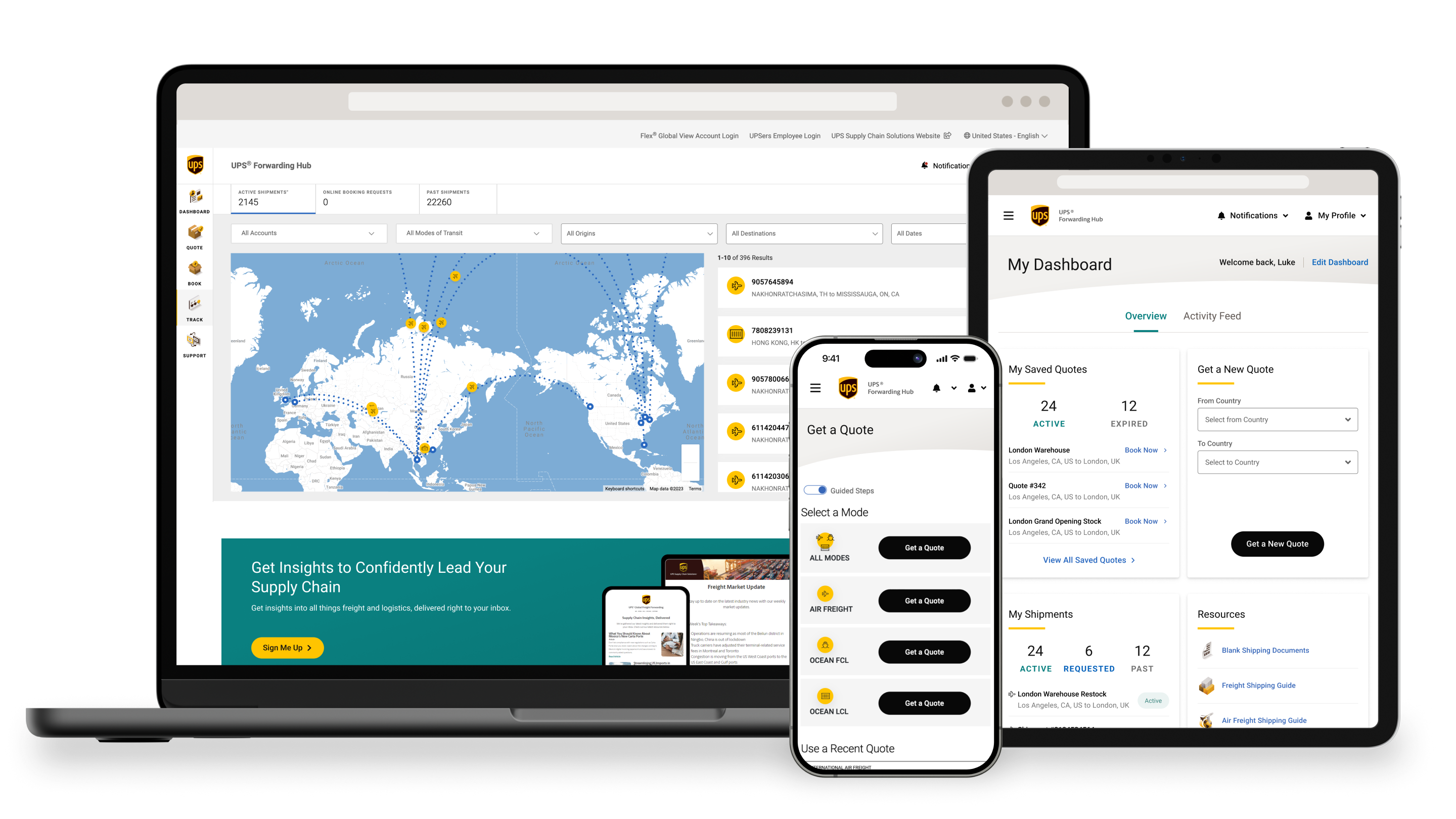
Get Started with an Air or Ocean Quote
On our UPS® Forwarding Hub, get and compare quotes, book shipments and track them end-to-end on one modern, easy-to-navigate dashboard.

Stay In The Know
Get expert insights into all things freight and logistics, delivered right to your inbox.