Navigating Serialization in Complex Healthcare Logistics
UPS Healthcare • 23 de abril de 2026 • Lectura de 3 minutos
Learn the importance of serialization in complex healthcare logistics to ensure regulatory compliance, supply chain visibility, and patient safety.
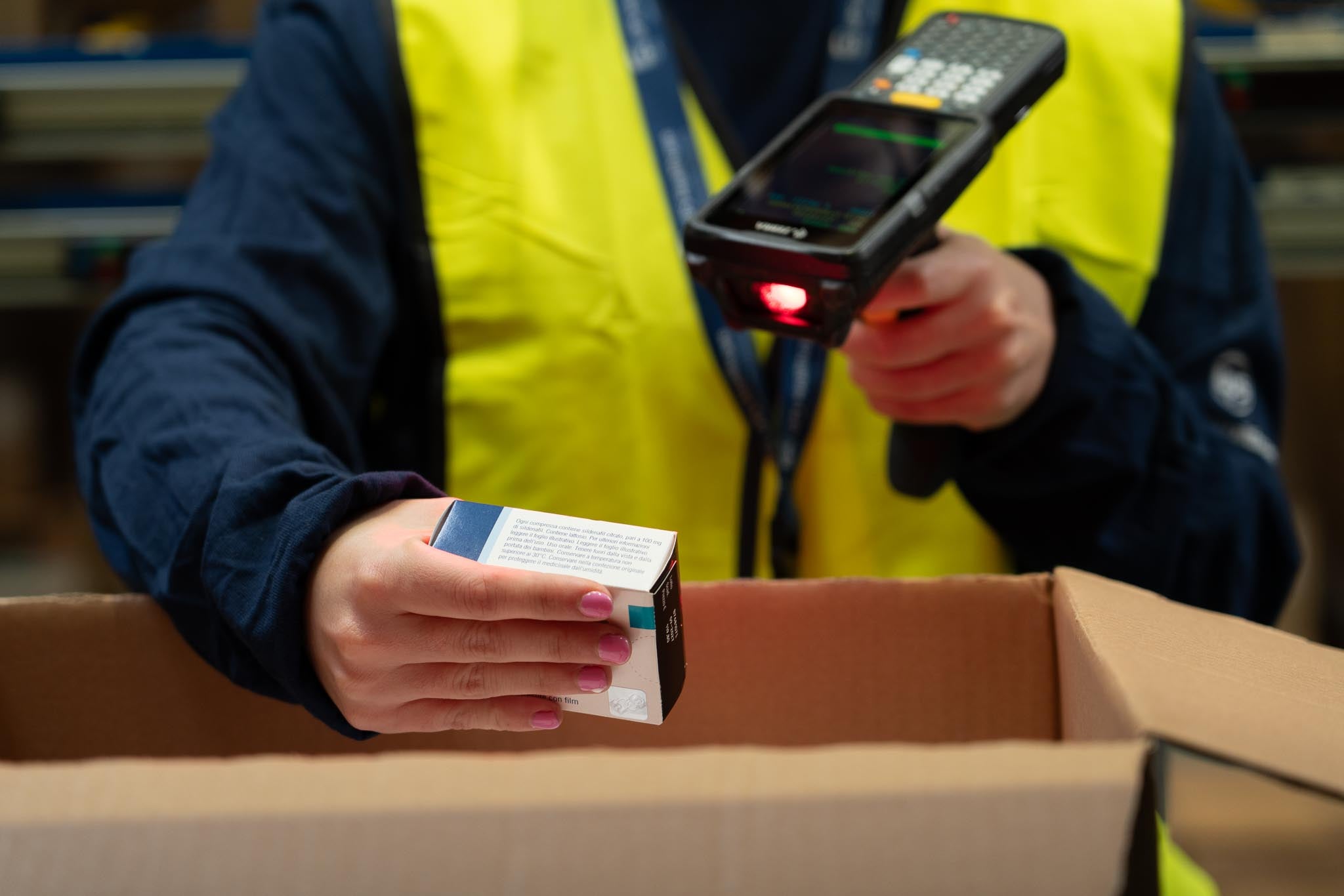
Every serialized unit tells a complete, verifiable story - where it originated, how it moved, and who had custody at every step.
Serialization is more than identification; it’s the foundation of interoperable, package-level traceability. Each product carries a unique identifier that is captured, exchanged, and verified across trading partners. This end-to-end traceability is not just a regulatory requirement; it’s a logistical advantage when executed properly, that ensures regulatory compliance, consistent control, and complete visibility at every stage, ultimately securing patient trust and protecting organizational integrity.
What makes Serialization complex?
However, scale creates regulatory and technical challenges for serialization in the healthcare supply chain. To maintain compliance with Drug Supply Chain Security Act (DSCSA) and GS1 standards, healthcare logistics companies must implement electronic package-level tracing for all pharmaceutical shipments. This involves managing Electronic Product Code Information Services (EPCIS) R1.2 and R1.3 event exchanges, as well as Global Location Number (GLN) and Global Trade Item Number (GTIN) choreography. They are also required to handle verification processes such as saleable returns and the Verification Router Service (VRS), in addition to following strict notification and quarantine procedures for cold-chain and temperature-controlled shipping and handling.
The technical demands are equally strict. Healthcare logistics networks must accurately validate EPCIS schemas and sequences to support effective cold-chain management. Providers are required to manage complex aggregation hierarchies and conduct Available to Promise (ATP) checks, tracking items from individual units to cases and pallets in order to prevent duplicate serial numbers. Teams must also maintain real-time quarantine states and a continuous audit history across their warehouse management and electronic quality management systems (eQMS). Lastly, partner-to-partner data handoff is fundamental to keeping the end-to-end process secure and efficient.
How UPS Healthcare Supports Serialization
UPS Healthcare manages healthcare serialization requirements by building an infrastructure that makes clarity the default.
Automatización
- Our "no serial, no move" policy helps ensure that every product remains fully traceable throughout the network.
- Fixed vision tunnels in our facilities enable rapid and accurate high-speed 2D DataMatrix capture for cold chain packaging.
- Inline case-build confirmation and real-time aggregation management align product data with physical inventory.
- Automated saleable-returns verification (VRS) quickly processes returned goods, efficiently getting safe products back into the supply chain.
Interoperable Data
- Our system architecture integrates serialization into daily warehouse functions, managing serialized inbound and outbound processing directly within our warehouse management system.
- The EPCIS gateway, which supports Applicability Statement 2 (AS2), Secure File Transfer Protocol (SFTP), and API connections, handles full schema and choreography validation to ensure cold chain compliance.
- In case of an anomaly, our exception divert protocols immediately isolate the product and automatically capture image evidence.
- We maintain strict quarantine state control and eQMS record retention, providing a complete and secure data trail for every item.
Operational Outcomes
These metrics lead to faster, more accurate verification of scaleable returns in healthcare logistics. They enable high-precision recall execution, so if a product needs to be pulled from the market, it can be identified and isolated immediately protecting patient trust and organizational integrity. Ultimately, these capabilities ensure ongoing audit readiness, continuous compliance, and reliability for our partners across the healthcare supply chain.
Prioritized Metrics
Successfully managing complex healthcare and biopharmaceutical logistics requires clear, reliable metrics to ensure operational excellence. Key among these are high EPCIS event-exchange success rates to facilitate reliable data transfer throughout the supply chain, strong VRS verification hit rates to support accurate product authentication, and scan accuracy at the unit, case, and pallet levels - especially critical in temperature-controlled and cold chain operations. Maintaining stringent exception-resolution SLAs ensures challenges are addressed swiftly, while robust record-retention and audit-readiness standards safeguard compliance and data integrity. Prioritizing these industry-wide metrics enables organizations to manage complexity with clarity and uphold the rigorous standards required in the healthcare sector.
Complexity is inevitable in healthcare logistics. Control, however, isn't optional. You need a logistics partner capable of managing strict regulatory requirements while delivering products safely and efficiently across the healthcare supply chain. By implementing serialization technology and automated compliance, you can protect your shipments and your patients through reliable, end-to-end compliant shipping and handling.
Contact UPS Healthcare today to learn more about our healthcare logistics and distribution services. Together, we can build a supply chain that delivers precision and visibility in every package.
Artículos relacionados
Sensor Linking: Get More from UPS Premier
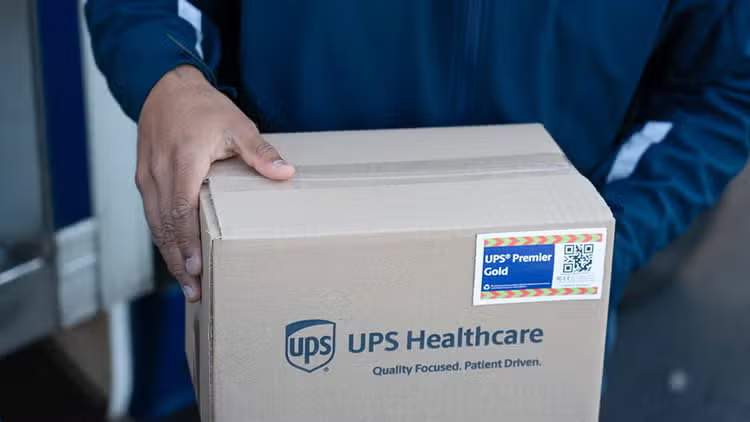
Sensor linking — a new capability within UPS® Premier — connects existing tracking technology to the UPS network, giving shippers a cleaner, more complete picture of every shipment.
3 Ways UPS Premier and Sensos Enhance Visibility
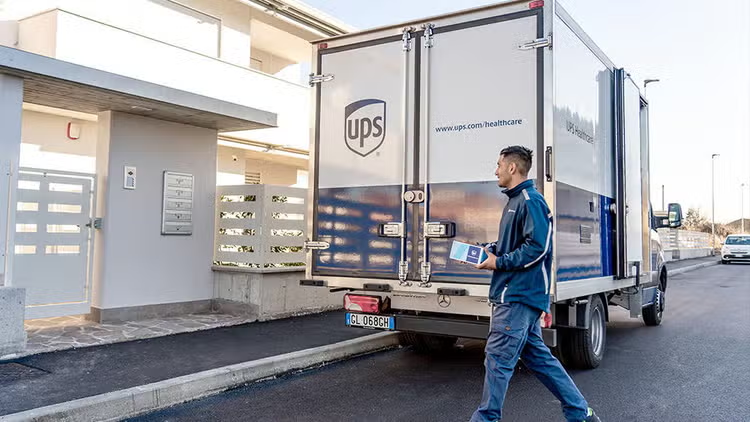
Discover how our technology collaboration helps keep healthcare shipments resilient and patients safe.

Protecting Your Pharma Supply Chain from Counterfeit Drugs
Find out how UPS Healthcare solutions can help you meet your DSCSA requirements and strengthen the security of your pharma supply chain in the fight against counterfeit drugs.