Updates to Dangerous Goods Regulations and Requirements
ORM-D Classification:
The hazard class ORM-D is scheduled for elimination, effective December 31, 2020. Such materials are likely eligible to be shipped under Limited Quantity provisions, which, for Ground service level packages, may be moved by highway and rail without shipping papers.
Lithium Batteries packed without equipment:
UPS only accepts air shipments of UN3090 or UN3480, lithium metal or ion batteries packed alone (without equipment) as fully regulated shipments. Section II or 49CFR 173.185(c) will not be accepted for air transport. Follow this link for more information about lithium battery shipping.
Lithium Batteries State of Charge:
Lithium batteries can only have a SOC at or less than 30 %. - All lithium-ion cells and batteries (UN 3480) and sodium ion cells and batteries (UN 3551) must be shipped at a state of charge (SoC) not exceeding 30% of their rated capacity. Cells and/or batteries at a SoC of greater than 30% may only be shipped with the approval of the State of Origin and the State of the Operator under the written conditions established by those authorities, see Special Provision A331.
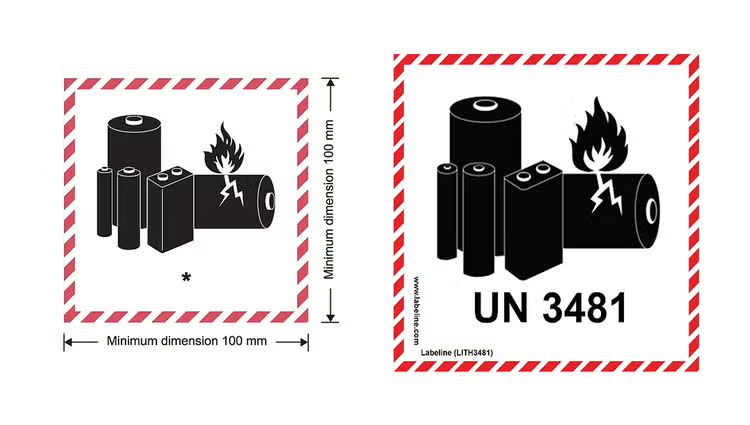
Lithium Batteries: IATA 7.1.5.5 in the Dangerous Goods Regulations (DGR) addresses the marking of lithium batteries for air transport. The key update is that the lithium battery mark no longer requires a telephone number to be displayed on the mark, simplifying labeling requirements for shippers. This change applies to both lithium-ion and lithium-metal batteries, including small cells and battery packs.
Lithium Batteries:
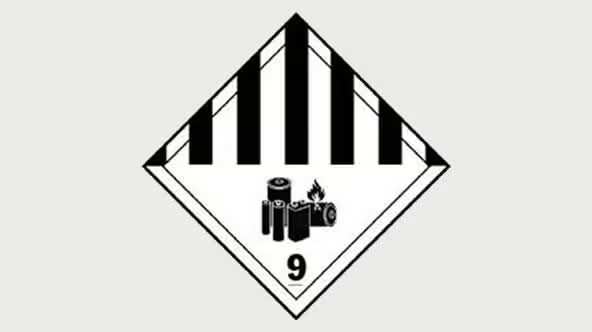
Lithium Batteries: The regulations are transitioning to a modified Class 9 diamond hazard, which will become mandatory for fully regulated shipments of lithium battery shipments on January 1, 2019, and is currently authorized for use. The modified Class 9 label includes a graphic to illustrate the presence of lithium batteries.
Emergency Contact Number:
For most hazardous materials that require shipping papers, a telephone number for contact in the event of an emergency must be shown on the shipping papers. Such telephone numbers must exclusively use numbers only, with a limited number of other characters permitted. The only acceptable information is the numeric telephone number, including any applicable country code or international access codes. The only alphabetical characters allowed are “EXT” when an extension must be included, or “OPT” when a caller must select an option number. Additional non-alphabetical characters that may be included are: period (.), dash (-), plus sign (+) and conventional parentheses. All other information relevant to the emergency telephone number must be presented with the “ER Registrant” information.
Segregation of Lithium Batteries in Air Service Level Packages:
On January 1, 2018, IATA proposes that carriers begin segregating packages containing UN3090, Lithium metal batteries and UN3480, Lithium ion batteries from other designated flammable and explosive materials, specifically these other UPS classes/Divisions:
- Class 1 – Explosives (other than Division 1.4S),
- Division 2.1 – Flammable Gas,
- Class 3 – Flammable Liquid,
- Division 4.1 – Flammable Solid,
- Division 5.1 – Oxidizer
Aboard aircraft, mandatory segregation of materials in the above listed classes/divisions from UN3090, Lithium metal batteries, and UN3480, Lithium ion batteries will take effect January 1, 2019. Shippers must not tender air service level packages to UPS (including overpacks) which combine UN3090 or UN3480 with any materials in the classes/divisions listed above.
If you have any questions about shipping hazardous materials with UPS, please call the Hazardous Materials Support Center at 1-800-554-9964.