Integrate UPS Supply Chain Solutions® Into Your Operations

Connect UPS Supply Chain Solutions® directly to your technology ecosystem using flexible API and EDI integration options. Whether you’re automating transactions, exchanging shipment documents, or extending visibility across systems, we can help you choose the integration approach that’s right for you.
Connect Your Supply Chain with Confidence
Today’s supply chains don’t run on a single platform. They rely on connected data flowing across transportation, brokerage, warehousing, finance, and analytics systems.
UPS Supply Chain Solutions® offers flexible integration options to support a wide range of systems and operational needs—from simple connections to complex, enterprise-scale environments.
Key capabilities:
- Streamline data exchange across systems
- Improve visibility across your supply chain
- Support high-volume transactions and workflows, with quoting, booking, shipment creation, tracking, labeling, document exchange, consolidation, and reporting
- Integrate seamlessly with your Enterprise Resource Planning (ERP), Transportation Management System (TMS), Warehouse Management System (WMS), and custom-built platforms – without disrupting how your teams work.
Start Here: Find the Right Integration Option
Choosing the right approach depends on your system architecture, data needs, and operational goals.
Start by considering:
- Do you need real-time system connectivity or batch processing?
- Are you focused on execution, visibility, or both?
- Do your systems require standardized formats or flexible integration?
The basics:
- What’s EDI? Electronic Data Interchange, or EDI, is a standardized, secure, electronic process allowing one company to send compatible information or payment to another company.
- What’s an API? Application Programming Interfaces (APIs) are standardized interfaces that allow different applications to communicate and share data – without needing to understand how each system is built.
- What types of APIs does UPS support? UPS supports RESTful APIs. REST is an acronym for Representational State Transfer and an architectural style for distributed hypermedia systems. Click here for more UPS API frequently asked questions.
General guidance:
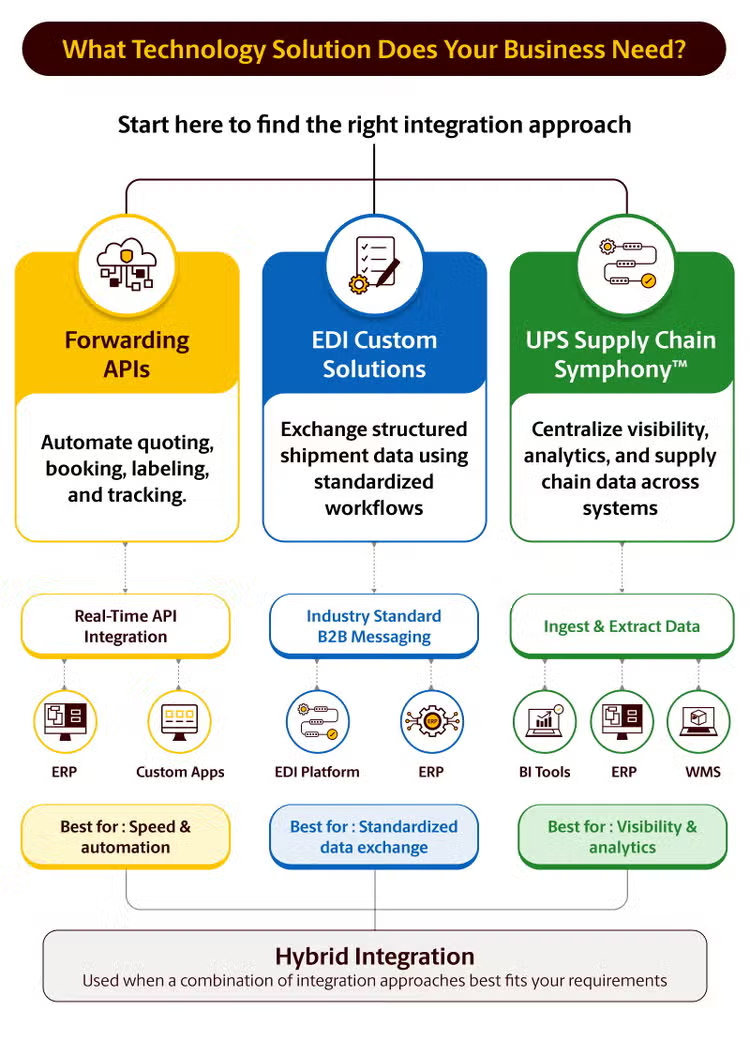
- Forwarding APIs → Real-time freight forwarding automation
- EDI Custom Solutions → Standardized, high-volume data exchange
- UPS Supply Chain Symphony™ APIs → Visibility and orchestration across systems
- Hybrid Integration → Combine real-time and batch approaches
UPS Supply Chain Solutions® Integration Options
Integrate freight forwarding capabilities directly into your systems, supporting faster automation and tighter system-to-system connectivity.
-
Best suited for businesses that:
- Want speed, flexibility, and tighter system-to-system connectivity—whether supporting a single shipping workflow or multiple modes and lanes.
-
Typical outcomes include:
- Faster execution
- Fewer touchpoints
- Cleaner handoffs between IT and operations
For organizations with established EDI infrastructure or complex trading partner requirements, UPS Supply Chain Solutions® offers custom EDI solutions that align with existing workflows while improving efficiency.
-
Best suited for businesses that:
- Use EDI as a core integration standard
- Need customized mappings or document flows
- Require stable, high volume batch exchange across partners and systems.
-
Typical outcomes include:
- Continuity for legacy integrations
- Reduced friction
- Standardized data exchange at scale
UPS Supply Chain Symphony offers a visibility and orchestration layer across supply chain activities, supporting end-to-end reporting, analytics, and unified visibility.
UPS Supply Chain Symphony APIs can help companies proactively manage exceptions, align actions across teams and vendors, and track activity.
Bring warehousing data, such as inventory and order statuses, and transportation data, such as shipment details and milestones, into the UPS Supply Chain Symphony platform or extract data from it.
-
Best suited for businesses that:
- Want to consolidate UPS and non-UPS data into a single view
- Leverage UPS Supply Chain Symphony data in your internal business intelligence, ERP, and analytics tools to enhance reporting and end-to-end visibility.
-
Typical outcomes include:
- more actionable visibility
- stronger analytics
- improved exception management
Many customers use a hybrid approach, combining APIs and EDI, to balance real-time automation with standardized batch exchanges.
This model is often used when different systems, regions, or partners require different integration methods.
Compare Your Integration Options
Compare the options side by side:
- Criteria
- Forwarding APIs
- EDI / Enhanced Integrations
- UPS Supply Chain Symphony™ APIs
- Primary purpose
- Real-time forwarding automation and data exchange
- Structured, document-based freight data exchange
- Visibility, analytics, collaboration through data ingestion or extraction
- Best for
- Automating booking, rating and tracking within ERP/TMS
- Companies using or requiring EDI standards
- Organizations wanting centralized visibility, dashboards and reporting
- Data exchange type
- REST APIs (JSON)
- Batch file exchange (EDI standards)
- REST APIs (JSON)
- Update cadence
- Real time
- Scheduled or batch
- Near real time (API cadence varies)
- Typical use cases
- Pick up requests, creating shipments, retrieving rates, tracking
- Bookings, status files, billing
- Visibility dashboards, analytics, case management
- System fit
- API-enabled ERP/TMS/WMS
- Enterprises with EDI infrastructure
- Organizations needing visibility layer
- Data coverage
- Forwarding shipments, milestones, rates
- Orders, bookings, shipment status, billing
- Multimodal transportation and warehouse ingestion/extraction, analytics, case management
- Effort required
- Developer integration
- EDI mapping and setup
- Developer integration
- When to choose
- Need speed, automation, flexibility
- Need standard structured documents
- Need visibility, analytics and unified data
Designed for Different Levels of Complexity
UPS Supply Chain Solutions® integration solutions support global, multimodal supply chains, high transaction volumes, complex system landscapes and evolving technology strategies.
Whether you’re integrating a single service or building a broader integration architecture, UPS Supply Chain Solutions® provides flexible options to meet you where you are and scale with you.
Start Your Integration Journey
Ready to move forward? Use the checklist below to get started and align on the right integration path for your business.
Your next steps:
- Confirm your primary goal and preferred integration approach (API, EDI, or hybrid).
- Review technical documentation in the UPS Developer Portal for APIs or discuss EDI requirements with your UPS representative. Click here to go directly to the Forwarding API page or here for the UPS Supply Chain Symphony API page.
- Engage your UPS Supply Chain Solutions® representative or contact us to scope complexity, onboarding steps and timelines.
- Align on development, testing and rollout with your IT and operations teams.
UPS Supply Chain Solutions® Technology & Innovation
Explore other ways UPS helps make shipping and logistics management easier with online shipping, visibility, and ready-to-use API tools.