Delivering Advanced Cancer Therapies in Asia
UPS Healthcare • October 15, 2025 • 5-minute read
As demand for Antibody-Drug Conjugates (ADCs) rises across Asia, logistics plays a vital role in their success. UPS Healthcare’s strategic investments in infrastructure, cutting-edge cold chain solutions, and expertise support the delivery of life-saving therapies and other delicate treatments, ensuring they are moved safely and efficiently from production to patient.
Author: Aidil Hamdan
Product Marketing at UPS Healthcare
Cancer remains one of the world's most devastating diseases1. It claims millions of lives each year and brings with it painful treatments, uncertain outcomes, and a heavy emotional toll on patients and their loved ones.
Cancer rates in APAC are rising faster than in Europe and are expected to worsen over the coming decades, as projections of incidence and mortality rates in APAC continue to surge2.
The challenge with cancer treatment is the struggle to balance effectiveness with compassion. Traditional therapies like chemotherapy can save lives but often come with harsh side effects, weakening the very people they aim to heal.
This is why antibody-drug conjugates (ADCs) represent such an important step forward. ADCs are rapidly emerging as one of the most exciting innovations in modern medicine. While cell and gene therapies have dominated recent headlines, ADCs are gaining momentum for their ability to precisely deliver potent drugs to cancer or diseased cells while minimizing harm to healthy tissue3.
New improvements in how antibodies are built and how they target specific cancer cells are driving rapid progress4. This is giving patients better treatment options and creating new possibilities for doctors and healthcare companies.
More than a breakthrough in cancer therapy, ADCs are setting the stage for broader applications across therapeutic areas and redefining the future of targeted medicine5.
In fact, the APAC ADC market is projected to grow at a compound annual growth rate of 15.8% from 2023 to 20286.
What are Antibody-Drug Conjugates (ADCs)?
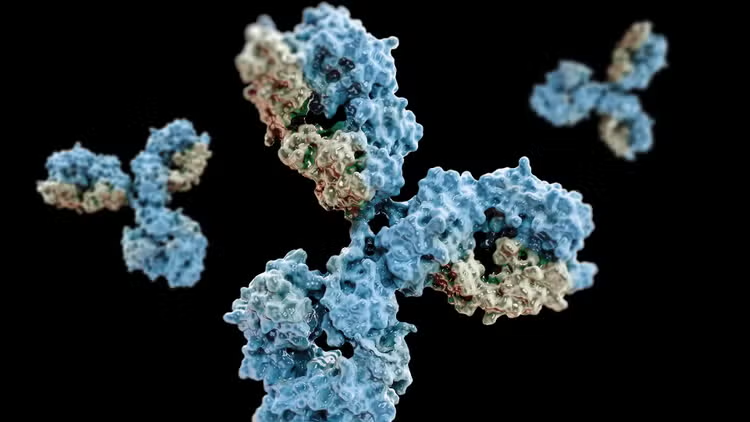
ADCs are typically made by attaching a monoclonal antibody to a cytotoxic drug (payload) through a chemical linker, forming the conjugate. Hence the name!
The antibody in an ADC plays a crucial role in recognizing and binding to its target, which is the antigen on the cancer cell. The strength of this binding not only determines how efficiently the ADC attaches to the target but also impacts how quickly it enters the cancer cells to deliver its payload.
Once the ADC enters the target cell, it releases its drug payload to kill the cell. The drug needs to be very potent so it can work at very small doses.
Connecting the antibody and the drug payload is a chemical linker. It is an equally important component, as it ensures that the drug payload is only released once the ADC has been internalized into the target cell, preventing damage to healthy tissues.
This precise targeting mechanism has made ADCs a groundbreaking advancement in cancer therapy, offering a way to deliver powerful treatments directly to cancer cells while minimizing harm to healthy tissues.
Some notable ADC approvals include Pfizer’s Mylotarg® for leukemia, Seagen/Takeda’s Adcetris® for lymphomas, Roche’s Kadcyla® and Daiichi Sankyo/AstraZeneca’s Enhertu® for HER2-positive cancers, and more recently, Gilead’s Trodelvy® and Astellas/Seagen’s Padcev® for breast, bladder, and other cancers.
The Role of Logistics: Ensuring the Safe Delivery of ADCs
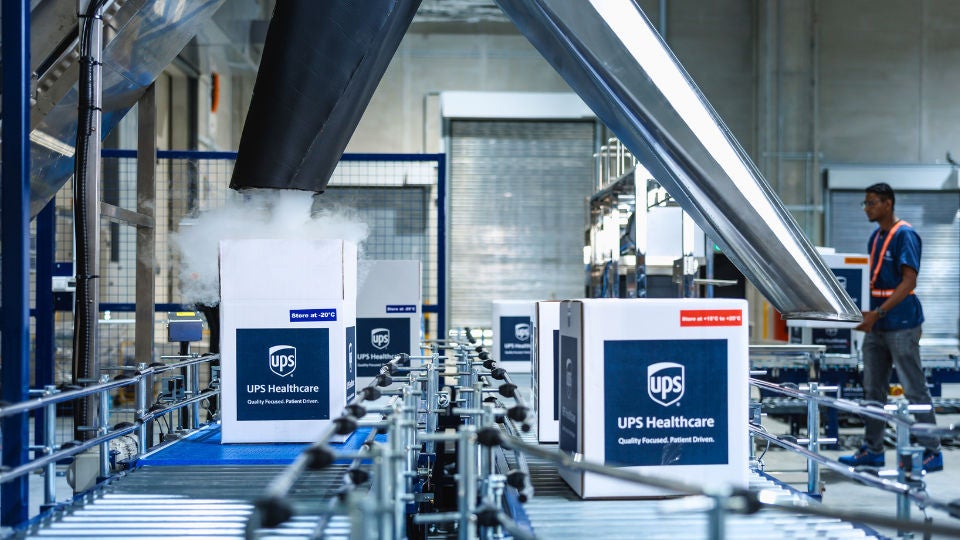
Transporting and storing ADCs require careful handling, like ultracold or frozen storage. Depending on formulation, many finished ADC products require storage between –20 °C and –80 °C7.
Manufacturers must also guard against thermal excursions. Temperature fluctuations, freeze–thaw cycles, exposure to thermal stress, and shaking during transportation can lead to aggregation, reduced potency, or even compromise linker stability8.
Healthcare logistics providers are uniquely positioned to mitigate these risks. With GDP- and GMP-compliant networks, they maintain product integrity through:
- Validated cold chain infrastructure: from ultracold storage to temperature-mapped warehouses and vehicles
- Real-time visibility: IoT sensors, GPS tracking, and data loggers provide end-to-end monitoring to detect and intervene on any deviation
- Specialized handling protocols: trained staff, secure packaging solutions, and contingency routing ensure stability is preserved even during cross-border transit
Tuas Biomedical Park: A Pharma Manufacturing Hub in Singapore

Singapore has grown into one of Asia's foremost pharmaceutical and biomanufacturing hubs. Over 30 global biopharma and medical technology leaders operate large-scale facilities here. Many of these plants in Singapore's western industrial belt serve as global and regional production bases for APIs, biologics and specialty pharmaceutical, including ADCs.
One notable example is AstraZeneca's US$1.5 billion investment in an ADC manufacturing facility in Tuas South. Scheduled to open by 2029, this facility will handle everything from antibody production and linker-payload synthesis to conjugation and finished goods—all in one location.
UPS Healthcare Opens New Facility in Tuas, Singapore
As ADC manufacturing capacity grows in Tuas, the need for reliable logistics becomes even more critical. ADC therapies, along with other oncology biologics, demand strict cold chain handling, precise inventory management, and end-to-end visibility to ensure product quality and safety.
UPS Healthcare’s newest and largest healthcare-focused facility in the region is purpose-built to meet these demands.
Located in Tuas, Singapore, the facility spans over 11,500 square meters (124,300 square feet) of cutting-edge infrastructure, doubling UPS Healthcare’s regional footprint to support the growing needs of the healthcare sector.

Located just 15 minutes from Tuas Biomedical Park, this facility provides critical infrastructure to support high-value therapies. With cutting-edge technology and robust quality assurance, it offers pharmaceutical companies a reliable platform to scale advanced treatments while ensuring seamless cross-border product integrity.
Advancing Cancer Therapies Through Logistics Excellence
As the demand for ADCs continues to rise across Asia, the role of healthcare logistics has never been more vital.
By combining cutting-edge infrastructure, specialized cold chain solutions, and a commitment to quality, UPS Healthcare is empowering pharmaceutical companies to deliver life-saving treatments with precision and reliability.
From Tuas Biomedical Park to patients worldwide, we help our customers protect the integrity of these complex therapies through reliable logistics solutions, supporting them as they turn scientific breakthroughs into meaningful outcomes for patients everywhere.
Sources:
- Wang, Y., Yan, Q., Fan, C., et al. Overview and countermeasures of cancer burden in China. Science China Life Sciences. Link
- Huang J, Ngai CH, Deng Y, et al. Cancer Incidence and Mortality in Asian Countries: A Trend Analysis. Cancer Control. Link
- Wang R, Hu B, Pan Z, et al. Antibody–Drug Conjugates (ADCs): current and future biopharmaceuticals. Journal of Hematology & Oncology. Link
- Sun Y, Yu X, Wang X, et al. Bispecific antibodies in cancer therapy: Target selection and regulatory requirements. Acta Pharmaceutica Sinica B. 2023. Link
- Wang R, Hu B, Pan Z, Mo C, Zhao X, Liu G, Hou P, Cui Q, Xu Z, Wang W, Yu Z, Zhao L, He M, Wang Y, Fu C, Wei M, Yu L, et al. Antibody–Drug Conjugates (ADCs): current and future biopharmaceuticals. Journal of Hematology & Oncology. 2025;18:51. Link
- BioPharma APAC. APAC Takes Center Stage in Antibody-Drug Conjugate Development, Transforming Cancer Treatment. 07 June 2024. Link
- Bioprocess Online. Temperature & Containment Controls in ADC Manufacturing. Link
- Cytiva. Aggregation in Antibody-Drug Conjugates: Causes and Mitigation. Link
More Blogs
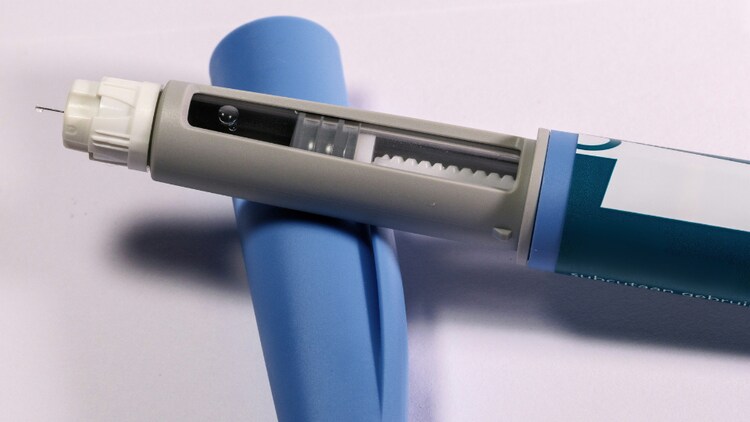
GLP-1 Medications Are Revolutionizing Healthcare —Here’s How
Learn how innovation and cutting-edge logistics make these therapies accessible for all.

Carrying Rare Cures Across Miles
From fragile vaccines to hopeful patients, explore the extraordinary efforts and cutting-edge logistics that turn scientific breakthroughs into life-saving realities.

Rethinking Clinical Trials in Latin America
Exploring the rise of a booming research market, challenges of representation, and strategies to address logistical challenges.