2026 Retail Consumer Trends
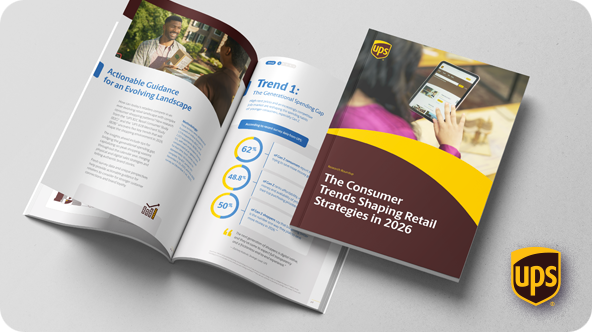
New research from UPS provides insights into the generational wealth gap and its impact on consumer spending habits, the rising trend of seasonal spending surges and the merging of digital and physical shopping environments.
March 3, 2026 • 7 minute read
Author: Phyllis Jackson, Senior Manager, US Marketing, UPS
2026 Retail Consumer Trends: UPS Research Roundup
Download the full report to access:
New Research from UPS
Understanding what drives a purchase can drive marketing strategy, product development, sales channel prioritization and more. However, the forces shaping consumer trends are becoming increasingly complex day by day. Successful brands must learn how to navigate a landscape defined by generational divides, economic uncertainty and a preference for seamless "phygital" experiences.
Building loyalty requires a deep understanding of what shoppers actually want, not just what retailers think they need. Identifying consumer trends and preferences across demographics is the backbone of a successful retail strategy.
Ahead we’ll take a high level view at the survey findings found in the 2026 Consumer Trends report from UPS. We will explore the critical consumer statistics and shifting behaviors that are redefining the industry. To gain the full picture and access the complete data set of consumer trends and shopping preferences across generations, click here to download the full report.
The State of Retail in 2026
Retail trends indicate that while more than a third of U.S. retail transactions happen online, e-commerce accounts for just 16.2%1 of total retail sales by dollar value. This statistic reveals that while digital channels are often used for browsing, research and smaller purchases, significant spending still happens in person.
However, it’s important to note that shopping patterns and sales channel preferences vary across generations.
- Gen Z (born 1997-2012) and Millennials (born 1981-1996): Shopping habits seem to be shaped significantly by convenience and technology.
- Baby Boomers (born 1946-1964) and Gen X (1965-1980): These generations drive the majority of U.S. retail spending, accounting for nearly two-thirds of total sales.2
Therefore, in order to succeed across generations, retailers must balance the tech-forward demands of younger shoppers with the purchasing power of older generations.
Three Leading Consumer Trends
According to the report, three powerful shifts are reshaping the retail landscape: the blend of physical and digital (otherwise known as “phygital”) shopping, a strong emphasis on value and the rising economic influence of Gen Z. However, it’s important to note that shopping patterns and sales channel preferences vary across generations.
1. The Rise of "Phygital" Experiences
Shoppers today expect digital and in-store experiences to blend seamlessly, “phygital” shopping experiences more than just a buzzword but a baseline expectation.
In fact, in-store purchases still dominate overall spending, suggesting that the role of the physical store is evolving, not disappearing.
“Many shoppers are looking for a showroom environment when shopping in person,” says Jarret Arnold, Strategic Lead at UPS. “They expect to speak to a product expert, and handle and try on different items, but not necessarily purchase them in-store.”
This behavior fundamentally changes how retailers should measure store performance. A store visit that results in a shopper going home and making online purchase later can be counted as a win because consumers may use physical locations to validate quality before committing to a purchase digitally.
2. Younger Generations Are Prioritizing Value
As the cost of living fluctuates, consumer trends seem to be pivoting toward value, especially among younger demographics.
UPS research highlights that 48.8% of Gen Z respondents list affordability, value and product availability as their top purchasing priorities.* Furthermore, 62% of Gen Z consumers report that they are actively trying to save more money and budget more carefully.**
This doesn't mean they aren't spending. It means they are spending with greater scrutiny. Retailers targeting this demographic must clearly communicate value propositions and offer competitive pricing.
3. Shifts in Buying Power
Gen Z is quickly becoming a major market force. As they enter their prime earning years, they are on track to become the largest and wealthiest generation by 2035, and their preferences seem to drive how brands connect with shoppers across all age groups.
“The next generation of shoppers are digital natives, and they’ve come to expect full transparency and a frictionless end-to-end experience,” says Zachary Kotleski, UPS Strategic Lead.
For retailers, this means that while many customers are more price-sensitive, they still expect shopping to be quick, simple, personalized and mobile-friendly. Brands that attract and retain loyal customers are rethinking how online and in-store experiences work together to deliver exactly that.
The Generational Spending Gap
One of the most significant findings in the 2026 report is the widening gap in how different generations approach shopping.
Gen Z: The Mobile-First Generation
As a truly digitally native generation, Gen Z favors mobile-first experiences. They often discover new products through influencers rather than traditional advertising, which could prompt brands to rethink their marketing mix completely.
Consumer statistics from the UPS study show:
- Gen Z and Millennials put a premium on convenience and technology.
- 42% of Gen Z shoppers say they mostly shop online.***
- Price transparency is non-negotiable for this group, who are accustomed to comparing prices across multiple tabs in seconds.
Payment flexibility is also key. While 59% of Gen Z report using "buy now, pay later" options, they have little tolerance for hidden fees, and surprise costs at checkout are a primary driver of cart abandonment for them.3
Gen X: The Bridge Generation
Gen X carries significant spending power. Although they make up only 19% of the population, they account for 31% of both in-store and online retail sales.3 Often described as a bridge generation, Gen X sits between the primarily physical shopping habits of Baby Boomers and the digital-first behaviors of Millennials and Gen Z.
They also have distinct search behaviors. Unlike younger shoppers who usually start with a search engine, Gen X tends to go straight to retailers they already trust.
- 21% of Gen X prefer discovering new brands in-store.†
- 46% kick off their product search directly on a retailer’s website or by visiting a store.†
Baby Boomers: Trust and Service
Research shows that Baby Boomers and Gen X now make up the bulk of retail spending, controlling nearly two-thirds of U.S. retail dollars.4 Shoppers from these generations care more about trust, product reviews, convenience, service and quality than viral trends or social influence.
They value in-store experiences with knowledgeable staff, and they appreciate familiar, reliable brands with transparent pricing, guarantees and warranties. Loyalty programs that deliver meaningful rewards like discounts, points or exclusive deals continue to resonate strongly with Boomers.
Prioritizing Resilience
Retail success in 2026 depends on how well brands understand their customers and respond to shifting priorities across channels and generations. Retailers that invest in flexibility, personalization and experiences that foster trust are more likely to stand out and earn long-term loyalty.
The data shows that consumer preferences are changing, and successful brands will be ready to change with them.
UPS supports retailers with end-to-end solutions for omnichannel inventory strategies, optimized fulfillment workflows and supply chain visibility. These tools help brands stay competitive as the retail landscape continues to evolve.
Ready to dive deeper into the data? Click here to download the full report, "2026 Consumer Trends to watch," to gain exclusive insights and practical strategies for your business.
“UPS B2C Retail Consumer Study” Questions: *Which of the following factors are priorities when you are making purchases? **Which of the following saving and spending actions, if any, are you currently doing or plan on doing in the future? ***How do you typically split your holiday shopping between online and in-store? † Where do you usually start your search for a product? ‡ Which of the following do you prefer when it comes to shopping? †† Which of the following do you prefer when it comes to shopping?
1 “Global Retail: 2025 Trends & 2026 Outlook,” Colliers, November 12, 2025.
2 “Circana report charts generational shifts reshaping retail spending,” Mass Market Retailers, October 8, 2025.
3 “Gen X: The Overlooked Generation With Outsized Impact,” ICSC, October 23, 2025.
4 “BNPL on the Rise: 65% of Gen Zers using BNPL More in 2025,” PartnerCentric, April 30, 2025.
Individual results and options will vary. UPS makes no promises of any specific outcome in this document but instead provides only example outcomes based on certain UPS customer experiences.