Power The Future: How Sustainable Warehousing Goes Beyond Business Success
Smarter warehousing reduces energy use and waste, improving efficiency and supporting sustainability.
February 17, 2026 • 7 minute read
Author: Phyllis Jackson, Senior Manager, US Marketing, UPS
Key Points
- Sustainability strategies can transform your warehousing operations by focusing on energy efficiency, waste reduction and optimized performance.
- Installing solar panels on the roof of an average warehouse could have the potential to generate enough energy to power 40 typical U.S. households.2
- Manufacturers can begin by assessing their current operations, setting clear sustainability objectives, and exploring options like LED lighting, solar rooftop arrays and automated storage and retrieval systems.
Sustainability Strategies That Improve Warehouse Operations
Automation and robotic systems can enable faster and more efficient picking and packing, and they operate without the need for extensive lighting or heating. With smart warehouse solutions, manufacturers can boost productivity and sustainability.
However, automation is just one factor in the sustainability formula. Creating a sustainability-focused strategy begins with an assessment that identifies areas for improvement. By collecting data and benchmarking, manufacturers can adopt strategies to do a host of things, including integrating renewable energy and improving transportation efficiency.
These operators can also enhance circular warehouse performance by using recycled pallets and packaging while promoting a culture of sustainability through consistent communication and leadership support.
“In an increasingly circular market, manufacturers have to think about sustainability in two ways: what it means for their supply chain and warehouse operations and how it impacts consumers,” says Carlos Roman, Strategic Lead, UPS.
Here are ways manufacturers can improve warehouse operations for greater efficiency and sustainability.
Energy Optimization
Energy optimization includes options such as using LED lighting equipped with motion and daylight sensors, high-efficiency insulation and roofing, and installing high-performance HVAC systems or passive ventilation. Additionally, manufacturers can utilize energy management systems that monitor and control energy usage in real time, enabling adjustments that boost efficiency and reduce waste.
Renewable Energy Integration
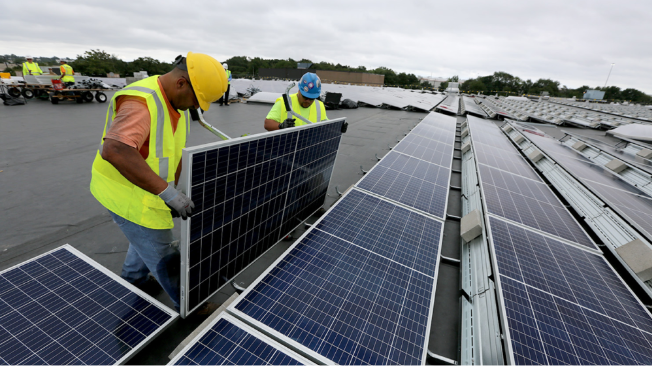
One of the most effective ways for warehouses to transition to renewable energy is to harness the power of the sun by installing rooftop solar panels. The United States has over 450,000 medium and large warehouses and distribution centers, and the rooftop square footage of the average warehouse could have the potential to generate enough energy in a single day to power 40 typical U.S. households.1
Installing these panels reduces the need for transmission lines, safeguards open spaces, and when combined with battery storage, can supply excess energy during peak demand hours and provide power during outages. Warehouses can generate still more energy by installing solar carports in parking areas, offering not only shaded parking but also energy production.2
Turbocharged Warehouse Efficiency
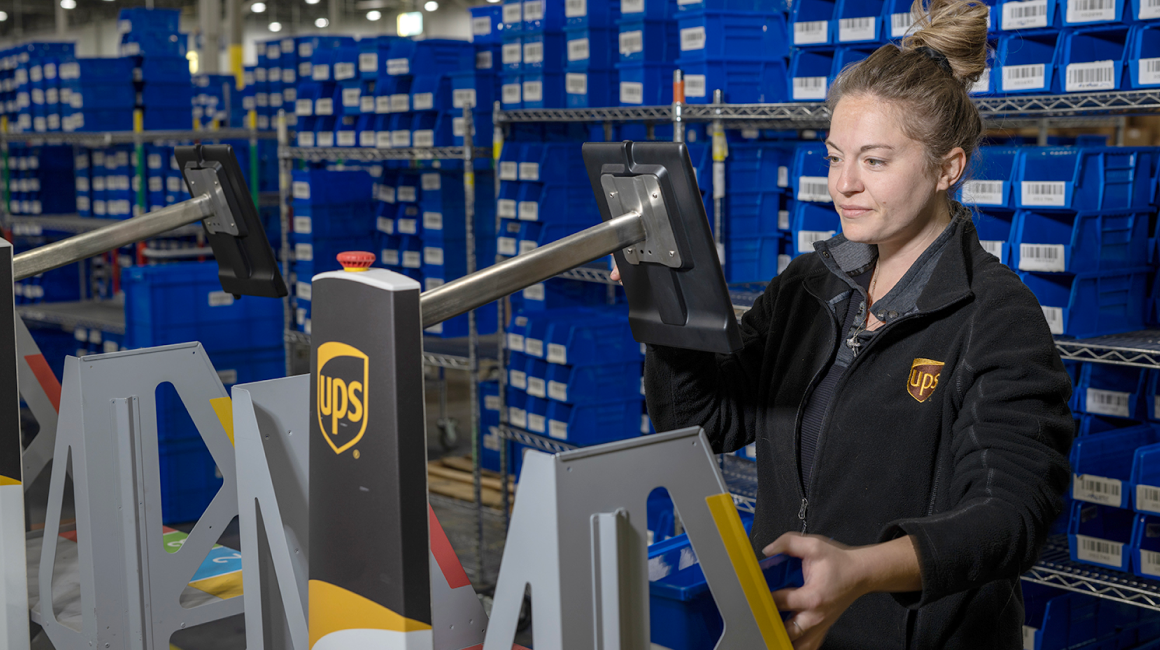
Our teams can assist with strategies designed to help boost warehouse sustainability, including ways to incorporate advanced automation and artificial intelligence (AI) technologies. For example, with AI-powered Warehouse Execution Systems (WES), warehouses can automatically prioritize high-demand orders.3 WES reduce energy consumption by minimizing unnecessary processing and optimizing labor allocation. They also provide real-time monitoring of capacity, fulfillment requirements and labor status, driving even greater efficiencies.
Maximizing Delivery Performance
By leveraging technologies like ORION (On-Road Integrated Optimization and Navigation), UPS significantly enhances delivery efficiencies, which translates into greater efficiencies for manufacturers. The system employs artificial intelligence and machine learning to identify the most efficient route for each driver, based on package volume, customer locations, and traffic patterns. It continuously learns and adapts from real-time data, offering instant rerouting based on road and weather conditions, as well as the driver’s location.
Performance Powered by Planet-Friendly Solutions
Sustainability isn’t just a goal — it’s a core value.
Today’s leading manufacturers are adopting smart, sustainable warehouse strategies to achieve measurable results, heighten brand equity, and meet climate commitments that customers can see.
“By partnering with UPS, you can transform your operations into a powerful engine of efficiency, resilience,” Roman says. “From renewable energy to AI-driven logistics, UPS helps you build a supply chain that’s faster and more circular.”
1 “The Solar Potential of Warehouses and Superstores Explained,” Environment America Research & Policy Center, May 30, 2025.
2 “How Manufacturing Plants Save with Solar Carports,” Solar Tech, December 15, 2024.
3 “UPS Launches Smart Warehouse Technology,” Logistics Management, accessed June 11, 2025.
Individual results and options will vary. UPS makes no promises of any specific outcome in this document but instead provides only example outcomes based on certain UPS customer experiences.