How Integrated Supply Chain Risk Management Helps Protect Manufacturing Operations
Learn strategies manufacturers can implement to help identify vulnerabilities, protect operational continuity and strengthen supply chain integrity.
July 21, 2026 • 7 minute read
Author: Phyllis Jackson, Senior Manager, US Marketing, UPS
Key Points
- Integrated supply chain risk management helps manufacturers identify vulnerabilities across suppliers, logistics networks and production planning before disruptions affect operations.
- Nearly 80% of organizations experienced at least one supply chain disruption over a 12-month period.1
- Greater visibility, transportation flexibility and proactive risk assessment help manufacturers protect supply chain integrity and maintain production continuity.
What Are Supply Chain Risks?
Supply chain risks are any disruptions that can affect the flow of materials and production process or the delivery of finished goods. These risks can emerge at several points along the manufacturing process. Common sources of disruption include:
- Raw material shortages, which may delay production before manufacturing even begins.
- Supplier instability, which can affect delivery timelines for critical components.
- Transportation disruptions, including congested ports or shifting trade routes that slow shipments.
- Geopolitical and trade policy changes, which can impact sourcing strategies, increase costs or affect established trade lanes.
- Cybersecurity threats, which can compromise logistics systems or supplier networks.
- Demand and price volatility, which can make planning production, managing inventory and controlling cost more complex.
- Intellectual property theft, such as having a patent stolen, which can weaken productivity or competitive differentiation.
Supply Chain Risk Can Disrupt Manufacturing Operations
Modern manufacturing depends on tightly connected supply networks.
Materials and components often pass through multiple suppliers and transportation routes before reaching the production floor. Finished goods then move through even more distribution channels before reaching customers.
That level of connectivity enables greater reach and supplier diversification across global markets, but it can also add friction points that introduce vulnerability in the supply chain. In fact, almost 80% of organizations reported at least one supply chain disruption over a 12-month period (2023-2024).1
Two major disruptions are affecting most manufacturers this year:
- Geopolitical developments and shifting trade policies: Manufacturers continue to navigate evolving trade dynamics and regional policy changes that influence how materials move through global supply networks.2
“Right now, cybersecurity risk and geopolitical volatility are at the top of the list for manufacturers. Tariffs, trade policy shifts and disruptions across key trade lanes are all influencing how materials move through the supply chain,” says Lorie Schlatterer, Manufacturing Strategic Lead, UPS.
- Cybersecurity threats: When logistics systems or supplier networks are compromised, manufacturers may lose visibility into shipments or inventory levels, making it harder to coordinate production.
Because manufacturing depends on precisely timed deliveries of materials and components, even small disruptions can affect production schedules. Identifying where risks are most likely to emerge helps manufacturers maintain reliable operations and protect supply chain integrity.
Evaluating Supply Chain Integrity to Stay Ahead of Disruptions
As supply networks become more interconnected, many manufacturers are taking a more coordinated approach to managing disruption. Rather than addressing risks and disruptions reactively, organizations are turning to integrated supply chain risk management.
Recent UPS research on supply chain resilience highlights how manufacturers are strengthening coordination among suppliers, logistics partners and operations teams to improve visibility and respond more quickly when disruptions occur.
This coordinated approach connects several critical functions across the supply chain, including:
- Supplier monitoring, which helps companies track supplier performance and identify potential delays
- Logistics visibility, which provides real-time insight into shipments and transportation networks
- Production and inventory planning, which helps operations teams adjust schedules or inventory levels when disruptions occur
- Visualize and optimize performance and production with digital twin technologies
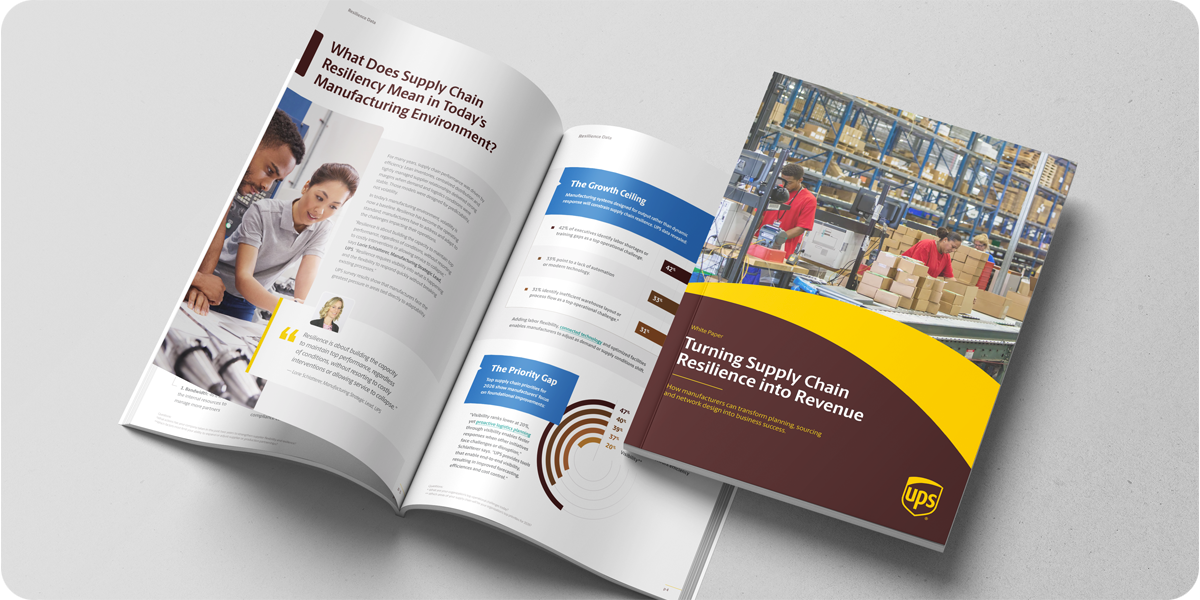
When procurement, logistics and operations teams share real-time information, manufacturers can respond more quickly as conditions change. For example, early visibility into supplier delays or transportation bottlenecks gives teams time to adjust routes, explore alternate sourcing or make inventory decisions before production schedules are affected.
In today’s fast-paced, complex supply chain environment, innovative uses of technology like RFID enable true real-time visibility. RFID tracking automatically senses packages as they move through the network rather than relying on manual scans. Choosing a logistics provider that prioritizes cutting edge technology and end-to-end visibility can help teams adjust quickly when disruptions do occur.
“A logistics provider becomes an extension of the manufacturer’s operations. The goal is to maintain continuity no matter what’s happening across the supply chain,” Schlatterer says.
Supply Chain Risk Assessment Strategies and Goals
Risk management provides the framework for identifying and monitoring potential disruptions across the network, and it helps promote a fast, agile response when needed.
A risk assessment typically begins with mapping suppliers, transportation routes and critical materials across the supply network. This process helps manufacturers understand where dependencies exist and where disruptions could have the greatest impact on production schedules.
Many organizations also evaluate potential disruption scenarios to better understand how issues could affect operations. These insights can guide decisions around supplier diversification, transportation planning and inventory strategies.
Manufacturers then apply that insight using operational strategies that improve visibility, increase flexibility and strengthen coordination with suppliers and logistics partners.
Improving Supply Chain Visibility and Coordination
Improving visibility begins with gaining clearer insight into how materials move through supplier networks and transportation routes. Real-time shipment tracking and logistics monitoring can help operations teams identify potential delays or bottlenecks as they develop.
Greater transparency across the supply chain also improves coordination between procurement, logistics and production teams. When cross-functional teams share information early, manufacturers can quickly evaluate options such as alternate transportation routes, production schedule adjustments or sourcing changes.
With a clearer view of supplier activity and shipment movement, manufacturers can make decisions faster while maintaining supply chain integrity.
Building Flexibility Into Transportation Networks
Transportation flexibility is also critical. Alternative trade lanes, multimodal shipping options and expedited freight solutions can help manufacturers stay productive when disruptions affect standard routes. Logistics partners support this flexibility by providing access to diversified transportation networks, helping teams evaluate alternatives and adjust strategies to maintain greater supply chain agility.
“Not every logistics provider can flex their network in the same way,” Schlatterer explains. "And when conditions change, having a partner that can adapt across modes, regions and timelines makes a significant difference in keeping materials moving.”
When conducted regularly, risk assessments help manufacturers strengthen supply chain integrity and improve their ability to adapt as global supply networks evolve. Combined with integrated supply chain risk management, these efforts support more resilient operations and help manufacturers maintain continuity, even as conditions change.

1 Latest BCI report reveals escalating supply chain disruptions drive increased tier mapping and insurance uptake, October 2024.
2 Deloitte 2026 Manufacturing Industry Outlook, November 2025.
Individual results and options will vary. UPS makes no promises of any specific outcome in this document but instead provides only example outcomes based on certain UPS customer experiences.