Parcel Dimensions, Size Limits and Weight Guide
Measuring your parcel is simple. By checking dimensions and weight up front, you’ll avoid additional charges and make sure your parcel qualifies for UPS services.
How To Correctly Measure a Parcel
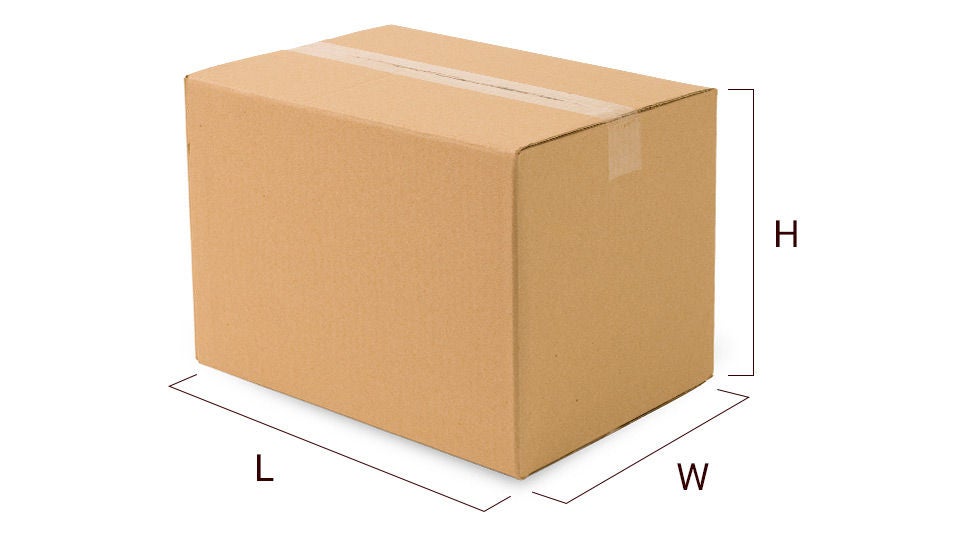
UPS Parcel Size and Weight Limits
FAQ
Parcels can be up to 400 centimetres in length and girth combined.
To accurately determine length and girth, use the formula: Length + 2x Width + 2x Height
Remember, the longest side of your parcel will be your length.
The actual weight is the parcel weight rounded up to the next whole kg.
Use a scale to determine the weight of the parcel. Round any fraction of a kg to the next whole kg.
Dimensional weight reflects parcel density, which is the amount of space a parcel occupies compared to its actual weight. Dimensional weight may apply to all UPS domestic and international parcel services.
Determine the parcel measurement in centimetres. For each measurement, start at the longest point, rounding each measurement to the nearest whole number.
Multiply the parcel length (longest side of the parcel) by the width by the height. The result is the cubic size in centimeters.
Divide the cubic size in centimetres by 5,000. Increase any fraction to the next half kilogram.
Compare the parcel's actual weight to its dimensional weight. The greater of the two is the billable weight and should be used to calculate the rate.
Compare the parcel's actual weight to its dimensional weight. The greater of the two is the billable weight and should be used to calculate the rate. For multiple-parcel shipments, total the billable weight of all parcels in the shipment.
Refer to the Determine the Weight and Size section of the Rate and Service Guide.