LTL vs. FTL: Choosing the Right Freight Mode for Cost and Efficiency
A freight mode comparison of LTL vs FTL and a closer look at shipments that don’t align with standard thresholds.
July 27, 2026 • 9 minute read
Author: Phyllis Jackson, Senior Manager, US Marketing, UPS
Key Points
- Freight that doesn't align with standard shipping thresholds can introduce hidden costs and operational inefficiencies across distribution networks.
- Approximately 25% of organizations identify cost control as their primary freight-related pressure, according to the UPS End-to-End Logistics x Freight Management Study.*
- Flexible freight programs like UPS® Ground with Freight Pricing provide additional options for shipments that fall near parcel and LTL thresholds.
Why Are Wholesalers and Manufacturers Optimizing Freight Costs?
Freight patterns across manufacturing and wholesale distribution networks are shifting. Shipment sizes are becoming less consistent, and freight is moving more frequently in smaller increments.
Although freight decisions are often framed as a choice between less-than-truckload (LTL) and full truckload (FTL), in reality, many shipments don’t fit into either. Manufacturers see it when production runs fall short of truckload volume. Wholesalers see it in orders that don’t fill an entire pallet.
Manufacturers are adjusting production and inventory strategies to respond more quickly to demand, which can result in less predictable shipment volumes. Meanwhile, wholesalers are adjusting inventory strategies to support upstream agility, a wider range of order sizes as customer expectations transition toward faster replenishment and more flexible ordering.
However, one solution that many wholesalers and manufacturers overlook is to route these shipments through a small package network. Many small package vs. freight routing decisions are driven by oversimplistic rules like automatically routing anything over 150 pounds to freight. However, with ongoing changes to freight pricing structures, these rules may be obsolete, and there may be an opportunity to revisit those thresholds and consider keeping multi-piece shipments of up to 1,000 pounds within a small package network. Re-routing these packages can lead to not only better cost outcomes but service and visibility as well.
What is the Difference Between LTL and FTL?
Less-than-truckload (LTL) and full truckload (FTL) serve different roles within a freight network.
- LTL consolidates shipments from multiple shippers, which allows smaller freight volumes to move without requiring a dedicated trailer.
- FTL uses the full capacity of a trailer to move freight directly from origin to destination.
The decision between LTL and FTL usually comes down to shipment size, number of pallets, lane consistency and how efficiently trailer space can be utilized. However, there are some instances where a shipment may not fit neatly into either category.
What is Ugly Freight?
Logistics teams often use the term “ugly freight” to describe shipments that don’t fit neatly on to a standard pallet. Although there are more packages that may be typically shipped as a single ground shipment, they don’t fill up an entire pallet and will usually be broken down by the LTL carrier to maximize space.
Ugly freight can introduce higher handling costs and operational complexity. For wholesalers, these inefficiencies can also affect margins and operational agility across a broader distribution network.
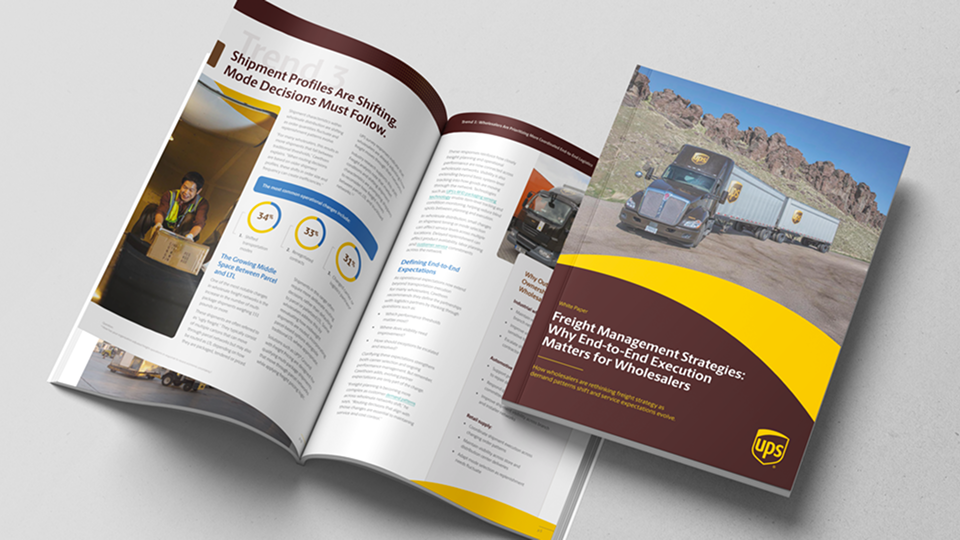
According to research revealed in the UPS white paper Freight Strategy: Key Shifts for Wholesalers, 25.1% of organizations* identify cost control as their primary freight-related pressure, and 38.8% report unexpected fees or surcharges have created friction with logistics partners in the past year.**
In addition to these challenges, many organizations also manage standard, conveyable shipments that move through existing networks but don’t align well with parcel or LTL cost structures.
For manufacturers and wholesalers managing complex distribution networks, these inefficiencies underscore the importance of aligning shipment size with the right transportation mode.
The Real Decision Behind LTL vs FTL: Trailer Utilization
Most freight mode decisions ultimately come down to one factor: trailer utilization.
When trailer space is fully utilized, full truckload shipments offer the greatest efficiency. The more of the trailer you fill, the more those transportation costs are spread out, while the freight moves directly to the destination with minimal handling.
Less-than-truckload networks address a different need. By consolidating shipments from multiple shippers, LTL carriers move smaller freight volumes without requiring dedicated trailer capacity. This allows organizations to move freight without waiting to fill a full truckload.
The challenge shows up when shipment sizes shrink and no longer align with traditional LTL structures. Shipments don’t align well with traditional LTL structures often move through networks that weren't designed for them. While it may appear convenient, this approach can introduce additional handling and routing complexity while still underutilizing transportation capacity.
That’s where things start to break down. The shipment doesn’t fit the capacity it’s moving on.
The decision becomes more complex when shipment profiles change. Freight that once moved efficiently in one mode may no longer align with the same cost structure or network model over time. In those cases, mode selection requires a closer look at shipment size, frequency and handling requirements.
When FTL Still Delivers the Best Value
FTL only delivers real efficiency when volume is consistent enough to keep trailers full.
This shows up on plant-to-distribution-center lanes, where production output keeps trailers full. On the wholesale side, high-density replenishment lanes often come close to that same threshold. In those instances, FTL allows freight to move from origin to destination with minimal handling.
The cost advantage of FTL goes beyond the rate itself. It comes from how transportation costs are distributed across the shipment. When a trailer is well utilized, the cost per unit decreases while transit becomes more predictable. Planning also becomes more straightforward, since shipments follow consistent schedules and routing patterns.
FTL also reduces handling-related variability. With fewer transfers between terminals, there's less opportunity for delays, misrouting or damage. For higher-volume lanes, this consistency can be as important as cost efficiency.
For manufacturers and wholesalers with stable shipment profiles, FTL continues to deliver strong value by aligning freight volume with dedicated transportation capacity.
Where LTL Creates Operational Flexibility
LTL plays a critical role in freight networks where demand is less predictable and shipment volumes are variable. This freight option becomes useful when production output doesn’t consistently support a full truckload. It lets facilities move finished goods without waiting to build enough volume to fill a trailer. For wholesalers, it supports a more frequent replenishment and allows smaller shipments to move without requiring full-trailer capacity.
It’s most useful in networks where order sizes fluctuate. Shipments can move as demand changes, rather than being delayed or forced into inefficient consolidation.
However, there are trade-offs. Because LTL networks rely on consolidation, shipments typically move through multiple terminals before reaching their final destination. Each transfer adds handling and routing complexity, which can affect transit consistency.
For shipments that align with LTL network design, the trade-offs are manageable. But when freight approaches truckload size without fully utilizing trailer capacity, those same characteristics can make mode selection less straightforward.
How Flexible Freight Programs Address the Gap
As shipment profiles change, many organizations are reevaluating how smaller or less consistent freight moves through their networks.
Flexible freight programs can provide additional options for shipments that no longer align well with traditional LTL structures.
UPS® Ground with Freight Pricing is one example. It enables multi-package shipments to move through the UPS Ground network without palletization, while still using freight-based pricing. This is particularly relevant for shipments that would traditionally move via LTL but have become smaller, less frequent or less consistent over time.
“A lot of shipments don’t fit cleanly into parcel or LTL. Companies end up choosing the closest option rather than the most efficient one. Solutions like UPS® Ground with Freight Pricing help fill that middle range so those shipments can move in a way that better matches their size and handling needs,” explains Kenneth Manjin, UPS® Ground with Freight Pricing Product Manager.
Flexible freight programs align pricing and transportation with actual shipment characteristics and can help reduce inefficiencies associated with smaller or less consistent LTL shipments.
They also simplify decision-making by giving logistics teams a clear choice for shipments that would otherwise require trade-offs between cost, handling and transit time.
Manufacturers and wholesalers managing complex networks can use these solutions as a more structured approach for shipments that no longer align well with traditional LTL structures.
Optimizing Freight Costs Requires Mode Discipline
Freight cost optimization is often treated as a pricing exercise. But it isn’t about pricing alone. It requires discipline in selecting and applying transportation modes.
For manufacturers and wholesalers, this starts with a closer look at shipment patterns. Understanding where freight consistently falls short of truckload capacity or exceeds parcel thresholds helps identify opportunities to adjust routing decisions. This level of planning also helps reduce operational disruption across manufacturing networks.
It also requires a more intentional approach to mode selection. Instead of defaulting to LTL or FTL based on historical practices, organizations are now expected to evaluate how each shipment aligns with available transportation capacity.
Over time, the impact shows up in a few consistent ways:
- Reduced unnecessary handling
- Improved consistency in transit
- Greater control over transportation spend
“Through pallet, fuel and accessorial savings, UPS® Ground with Freight Pricing has the potential to reduce shipping costs by up to 20% compared to less-than-truckload freight,” says Charles Cawthorn, Wholesaling Strategic Lead, UPS.
Optimizing freight costs ultimately comes down to how well shipment size aligns with the capacity being used. That requires ongoing evaluation of shipment profiles and routing decisions, as well as changing demand patterns. For shipments that move via LTL but no longer align well with its cost structure, flexible options such as UPS® Ground with Freight Pricing can help bring more consistency to how those shipments are priced and moved.
UPS End-to-End Logistics x Freight Management Study questions: *What is the single biggest freight-related pressure facing your organization right now?**Which issues, if any, have created friction with logistics partners in the past year?
Individual results and options will vary. UPS makes no promises of any specific outcome in this document but instead provides only example outcomes based on certain UPS customer experiences.