UPS Tracking Support
Track your shipments, get help understanding their journey and make the changes you need.
Support for Every Tracking Status
Understand Tracking Status
We put together a list of common tracking statuses to help you track your package and better understand where it is in its journey.
What to Do About a Delivery Notice
Your UPS driver left a delivery notice because we missed you the first time around.
Change a Delivery
Reroute, hold or cancel your delivery so we can get it to you when and where you need it.
Find Your Package
Need help finding your shipment? Check tracking updates, understand delivery statuses, or learn what to do if a delivery attempt was missed - all in one place.
Avoid Missed Deliveries
Get alerts on incoming packages and photo proof of delivery, or reschedule multiple packages at the same time.
File a Claim
If your package is damaged, has gone days without a scan or says delivered but you can’t find it, file a claim. We’ll investigate and see how we can make it right.
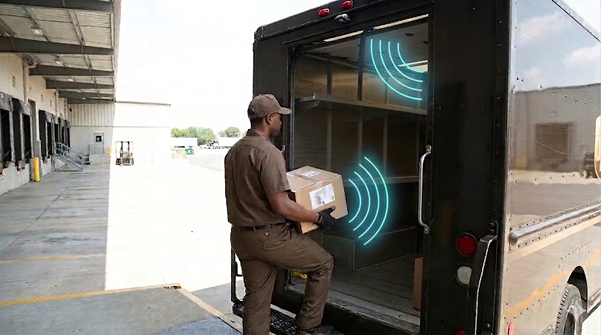
Precise Tracking with Sensors and Scans
We’re adding RFID sensors to our network to give you more tracking details.
FAQ
Generally, our drivers can deliver as late as 9 p.m. During the holiday season, our drivers may deliver even later.
If we are unable to deliver a package that shows a status of "out for delivery," we’ll try another delivery on the next business day.
Tracking your package on UPS.com will give you the most up-to-date information about the status of your shipment. Check back periodically for shipment progress updates.
UPS Ground packages are generally delivered anytime Monday through Friday between 9 a.m. and 9 p.m. (and sometimes later) to residences, and to business addresses during their normal business hours.
While ground packages can’t be scheduled to arrive at a specific time, UPS express shipments have guaranteed delivery times that vary by service.
Your driver will try to leave your package out of plain sight to protect it. Check exterior doors or other places your package could’ve been placed, like the porch, back patio or garage. Also check with anyone who may have picked up your package, like a neighbor. If you still can’t find it, contact the seller to start a claim.
UPS tracking numbers appear in the following formats:
1Z9999999999999999
999999999999
T9999999999
999999999
UPS will also track the following types of tracking numbers, which contain from seven to 20 characters:
Delivery Order/Sub-PRO Number: Less-Than-Truckload (LTL)/and Truckload (TL) child shipment tracking numbers
House Air Waybill: Used for air freight movement
House Bill of Lading: Used for ocean freight movement
PRO Number: Used for surface freight movement
UPS Delivery Notice: A bar-coded notice, which includes a 12-digit reference number, given on first delivery attempt in select countries
UPS Service Notice: A notice given on first delivery attempt in select countries
UPS Mail Innovations Tracking Numbers
You can track your UPS Mail Innovations piece on both ups.com and upsmi.com. UPS Mail Innovations tracking numbers differ from a small package reference number in length and terminology.
UPS Mail Innovations tracking numbers appear in the following formats:
United States Postal Service Delivery Confirmation Number: a 22-34 numerical identifier assigned by the U.S. Postal Service when Delivery Confirmation is requested
Sequence Number (MMS/MMI Number): an 18-digit number assigned internally by UPS Mail Innovations or UPS Worldship
Mail Innovations Compliant Package ID: a barcode-type identifier assigned by the shipper to each mail piece, using the structure below:
MIXXXXXXNNNNNNNNNNNNNNNNNNNNNN
This indicator is made up of the following three components:
MI - a UPS Mail Innovations indicator
XXXXXX - a unique 6-digit customer number assigned by UPS Mail Innovations
NNNNNNNNNNNNNNNNNNNNNN - a unique number, up to 22 characters, assigned by the shipper to identify a mail piece. Use alpha and/or numeric characters with no spaces or symbols. The same ID should not be reused for other mail pieces for at least six months.
First of all, don’t click on any suspicious links.
-
A real UPS link will start with “https://www.ups.com” or “https://billing.ups.com.”
-
A real UPS email will come from:
-
A real UPS text will come from 75137 or 24031.
-
If they’re asking you to pay for a package, track it first and select “pay now.”
-
If they’re asking you to pay a bill, log in to the billing center and select “pay now.”
If you’re not sure, contact us. You can learn more about how UPS is preventing fraud here.
There are several conditions to display a map of the driver en route to the delivery address.
- The package must be in an “Out for Delivery” status
- You must be logged in or have authenticated that you are a My Choice or My Choice for Business customer
- In the US, the map will be visible one hour before the stated delivery window or service commitment time
If the delivery window has not yet reached those thresholds - or if no estimated delivery time window is provided - the Follow My Delivery map will not be displayed.